


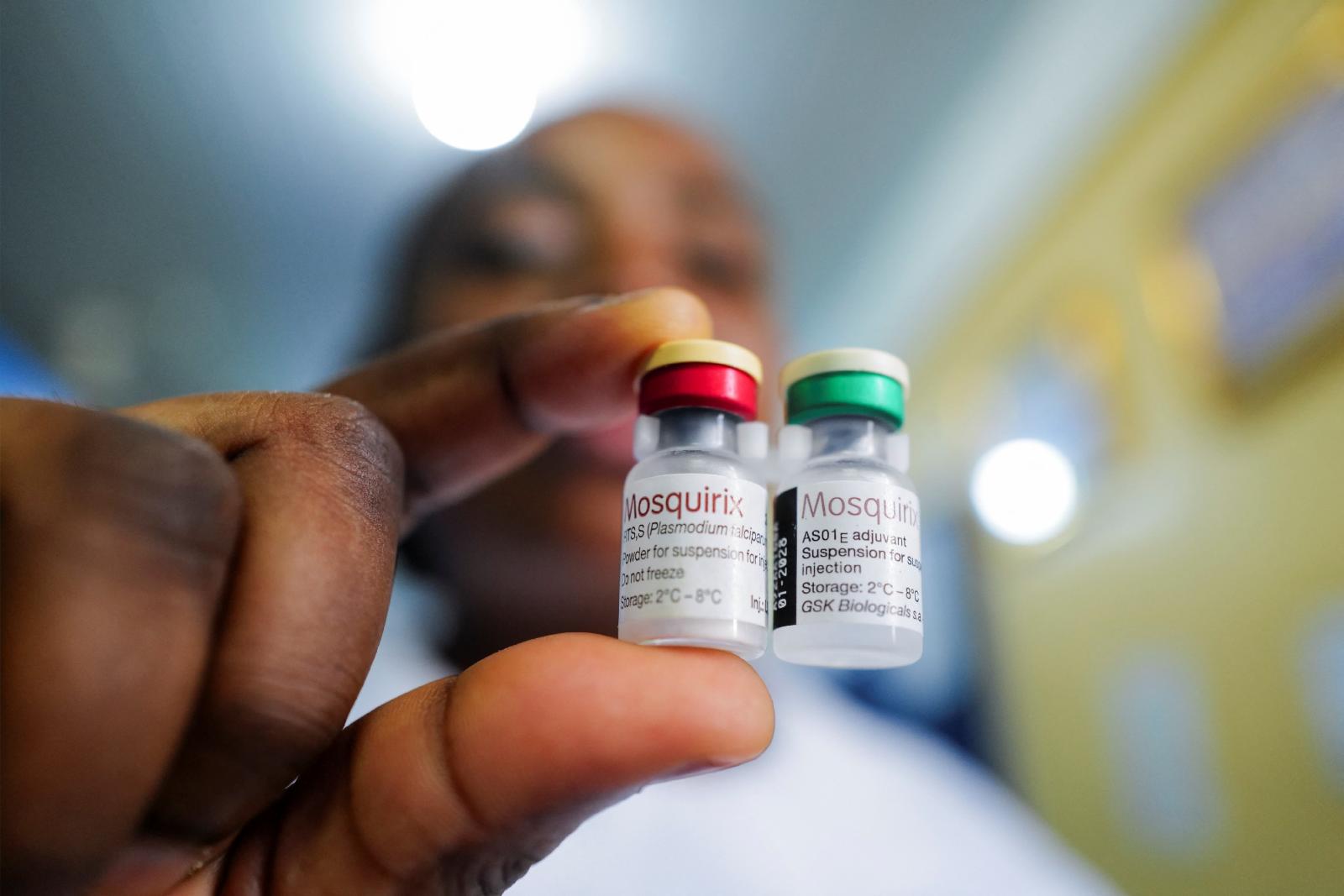
WASHINGTON (OSV News) — The future of efforts to eliminate malaria in sub-Saharan Africa may depend in part on a U.S. policy shift now drawing mixed reactions.
New U.S. Global Health Strategy
In September, the State Department unveiled the Trump administration’s America First Global Health Strategy, which it described as “a comprehensive vision to make America safer, stronger, and more prosperous” and also claimed it “will protect the homeland by preventing infectious disease outbreaks from reaching U.S. shores.”
In a February report, an interfaith coalition of malaria-fighting groups warned that progress against the disease has “slowed in several regions,” calling the current moment a “crossroads.”
But the strategy is considered one feasible path forward in eliminating the deadly disease spread by mosquitoes, the coalition said in its report titled “Making Country-Led Malaria Control a Reality.”
Questions About “America First”
For a Methodist bishop from Mozambique who was on a March 19 panel sponsored by Georgetown University’s Global Health Institute in Washington, the inclusion of “America First’ in the State Department strategy is puzzling.
“It’s tricky, because what do we mean by America First?” Bishop Dinis Matsolo of the Methodist Church of Southern Africa, Mozambique Synod, said in an interview with OSV News. “It would be interesting to hear a clarification as to what that means. We all belong to the same world. We need each other.”
He added, “I think the Catholic community in the United States should know that in other countries, including Mozambique, we have religious leaders who are profoundly involved in the issues of health and climate change that require support in order to sustain. Those activities have stopped now because of the cuts (in U.S. aid).”
Impact of USAID Cuts
The U.S. government’s relief efforts for malaria were devastated by the elimination of the U.S. Agency for International Development under the second Trump administration. By July 2025, USAID effectively ceased to exist, with 85% of its programs cut.
However, “I always want to be optimistic,” Bishop Matsolo said. “We want to encourage the involvement of all the state quarters (agencies).”
Faith-Based Malaria Response in Mozambique
Bishop Matsolo is the executive director of Programa Inter-Religioso Contra a Malaria, or PIRCOM, a faith-based organization focused on eliminating malaria that was launched in 2006 with U.S. funding.
The Catholic Church in Mozambique is a founding member of PIRCOM and is represented on the board. The group works directly with the Archbishop João Carlos Hatoa Nunes of Maputo, Mozambique, and other Catholic representatives at provincial and district levels across the country.
According to the World Health Organization, in 2024, there were an estimated 282 million malaria cases in 80 malaria-endemic countries — an increase of about 9 million cases from 2023. Three countries — Ethiopia (+2.9 million), Madagascar (+1.9 million) and Yemen (+378,000) — accounted for 58% of the estimated case increase from 2023 to 2024.
Push for Country-Led Malaria Control
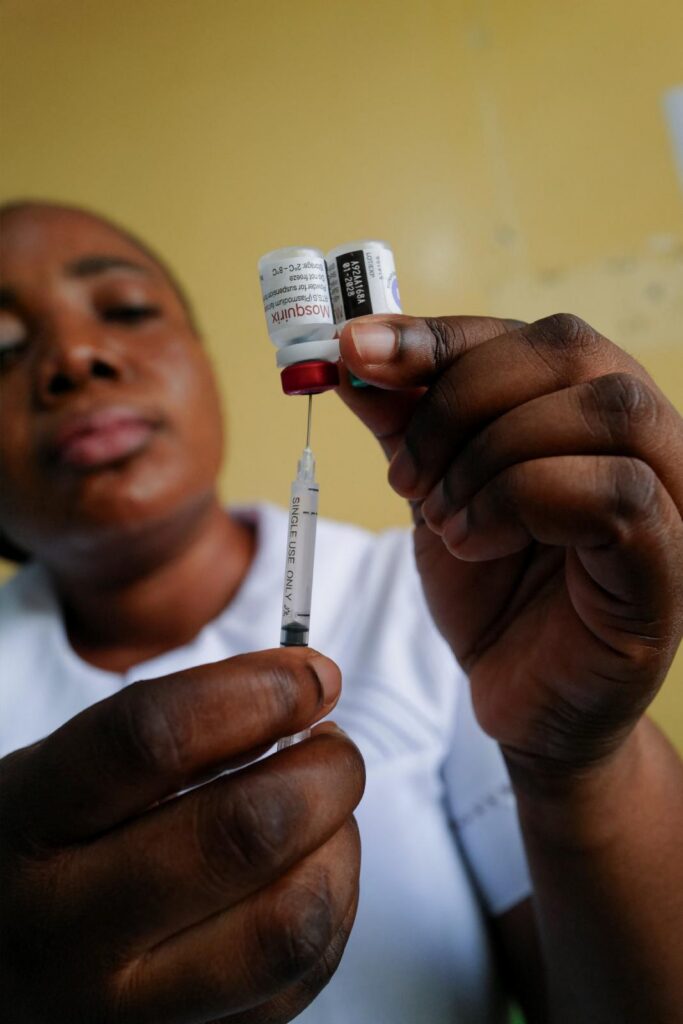
The America First Global Health Strategy, the interfaith coalition report states, “recommits the U.S. to achieving the globally agreed goals by 2030. It endorses the vision of reducing global malaria mortality and case incidence by at least 90% from 2015 levels, eliminating malaria in at least 35 countries, and preventing the reestablishment of the disease in all countries that are malaria-free.”
The response, according to the coalition report and the panel discussion, has to be “country-led malaria control.”
The strategy “envisions a future in which public and private funders in malaria-endemic countries are responsible for their own national efforts to end the disease,” the report said.
This awaits memorandums of understanding, or MOUs, negotiated by the State Department with 70 countries over the coming months to specify what entity will provide funding, and for what.
The coalition’s report emphasizes, “Continued strategic U.S. financial and technical support for endemic countries during this transition will determine, to a large extent, the trajectory of the global fight against malaria in this historic moment.”
In profiling five countries — El Salvador, Indonesia, Mozambique, Nigeria and Tanzania — and key factors in each one’s malaria response, the coalition notes in particular that across Mozambique, “over 4,000 faith leaders … are using their unique influence to advocate for policy change, deliver public health messaging, mobilize volunteers and monitor medicine supplies — trusted voices mobilizing communities.”
Debate Over U.S. Global Health Funding
The State Department’s 40-page report on the newly launched America First Global Health Strategy, complained of “significant inefficiency and waste” in U.S. health foreign assistance programs. As an example, the report asserted that data from the President’s Emergency Plan for AIDS Relief, or PEPFAR, “shockingly” shows “that only about 40% of PEPFAR’s budget goes directly to finance on-the-ground service delivery.”
But a number of Catholic organizations, including Catholic Relief Services — the overseas relief and development agency of the Catholic Church in the U.S. — support the aims of PEPFAR, the largest global health program devoted to a single disease. It is credited with saving 25 million lives from AIDS and with scaling back the epidemic’s spread.
Kurt Jensen writes for OSV News from Washington.
