


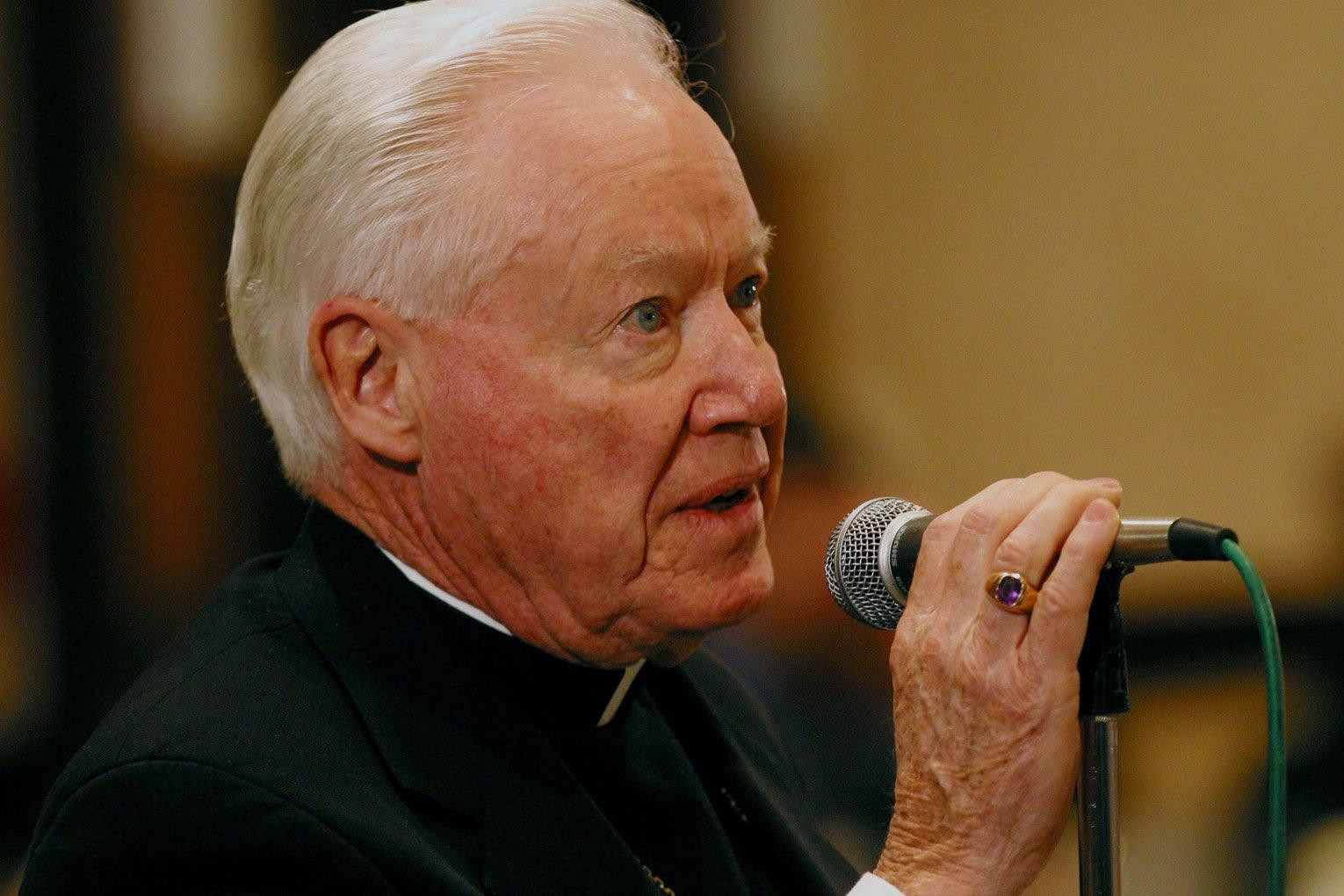
GREEN BAY, Wis. (OSV News) — When Bishop Robert J. Banks arrived in Wisconsin in 1990 to lead the Diocese of Green Bay as its new shepherd, he received a Green Bay Packers jersey — emblazoned with No. 10.
It had nothing to do with any player — currently Packers quarterback Jordan Love wears that number — but with being the diocese’s 10th bishop, serving until 2003. At the time, the Packers and the diocese hosted a preseason game with ticket sales funding diocesan charities.
Not only was it a change from the New England Patriots for the Boston native, but an adjustment from big cities to the Midwest.
Bishop Banks once recalled looking out the plane window and seeing farm field after farm field. He quickly fit in, though, enjoying the annual Rural Life Days, blessings seeds and animals, and even climbing into farm tractors.
Many are reminiscing about Green Bay’s bishop emeritus since his death Jan. 25 at age 97, about one month shy of his 98th birthday. A funeral Mass will be celebrated Feb. 6 for him at St. Francis Xavier Cathedral in Green Bay, with Green Bay’s Bishop David L. Ricken and retired Auxiliary Bishop Robert F. Morneau as celebrant and homilist respectively.
At the time of his death, he was among the nation’s oldest bishops.
Bishop known for ‘real pastoral heart’
Bishop Banks had headed the Green Bay Diocese for 13 years. In 2003, as required by canon law, he submitted his resignation to the pope when he turned 75 that February, and St. John Paul II accepted it that October.
Msgr. John Schuh, his master of ceremonies, recalled them driving the diocese together. “We would count the silos,” he told OSV News.
“He was the best thing for the diocese,” Msgr. Schuh added. “He always tried to make peace with everyone.”
Sister Ann Rehrauer, a Sister of St. Francis of the Holy Cross in Green Bay, who was chancellor for Bishop Banks until 1995, agreed.
“He was a wonderful bishop to work for,” she recalled. “He was that really great blend of a fine administrator but also with a real pastoral heart.”
She added, “He treated staff, not as people who worked for him, but people he truly cared about.”
‘Father Bob’ from Boston
Robert Joseph Banks was born on Feb. 26, 1928, in Boston. He attended parish and public school until, in his senior year, he entered Cathedral High School “because the pastor thought I should learn Latin.” Which, he added, turned out to be a good thing, since all the classes he took later in Rome were in Latin.
He attended St. John’s Seminary in Brighton, Massachusetts, and the North American College and the Gregorian University in Rome. He was ordained a priest at the Lateran Basilica on Dec. 20, 1952. Returning to Boston, he served at parishes before going to St. John Seminary in 1959. There he was a canon law professor, academic dean and, finally, rector until 1981.
More parish ministry followed. Once he retired, Bishop Banks noted that those years were among his favorites and his most loved title became “Father Bob.”
At one parish, he met a third grader, harassed by bullies and afraid to walk home. He offered to walk with her, but she said she was waiting for her brother. Father Banks waited until the brother arrived, startled that he was a first grader. But the two children walked home, holding hands, unafraid. He called that a metaphor for the Church, walking hand in hand in faith, with the Lord walking along unseen.
He was auxiliary bishop and vicar general for the Boston Archdiocese when, on Oct. 10, 1990, he was appointed to Green Bay.
Green Bay ministry highlights
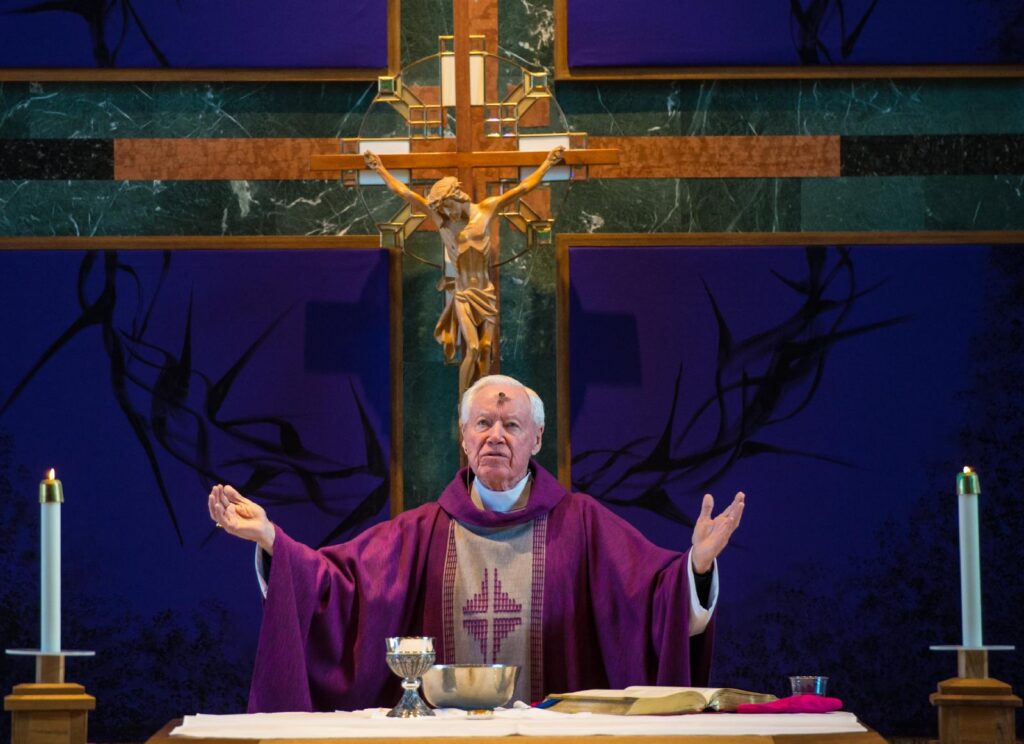
Highlights of his 13 years in Green Bay included pastoral letters on the Eucharist and stewardship; renovation of a summer camp, Camp Tekakwitha, to welcome year-round retreats; and overseeing “increased ministry to Hispanic newcomers,” which included learning Spanish, for homilies at Spanish-language Masses.
His tenure also saw the genesis of the Catholic Foundation of the Diocese of Green Bay to fund ministry, education and social services. Today, the foundation oversees assets of over $200 million.
On the national level, Bishop Banks was a member of the Committee on Catholic Education of the U.S. bishops’ conference from 1990 to 1993 and its chair from 1993 to 1996. In 1996, he became the conference’s treasurer. Among other roles, he served on a Roman Curia body tasked with addressing the global scarcity of clergy. The body existed from 1991 to 2013.
In 1998, Bishop Banks accompanied St. John Paul on his visit to Cuba. He later returned to Cuba to meet with the Cuban bishops.
Learning Boston scandals’ lessons
His ministry was overshadowed by the clergy abuse scandal, with the Boston Archdiocese under Cardinal Bernard F. Law, a flashpoint. Cardinal Law resigned as archbishop of Boston on Dec. 13, 2002, when it became clear he had knowingly transferred priests accused of sexually abusing children. He died in a Rome hospital Dec. 20, 2017.
Bishop Banks often admitted sadness over the issue, regretting that there weren’t then more procedures and policies that would have helped the Church stop abusive priests faster.
“Bishops are accused of cover-ups. So, it just doesn’t do any good to explain what was going on,” he said in 2003. “It’s something that happened; you (meaning himself and other bishops) have to live with it.”
However, in Green Bay, Bishop Banks made a point to oversee implementation of policies to protect children, policies which are constantly updated to this day.
Bishop Ricken said his predecessor “served the diocese with dedication and fruitful leadership for 13 years. During that time, he guided the diocese through important moments of renewal and transition.”
“What I most appreciated about Bishop Banks,” Bishop Ricken added, “was his kindness and Irish charm, which he preserved even while enduring severe health challenges.”
‘This is my diocese, these are my people’
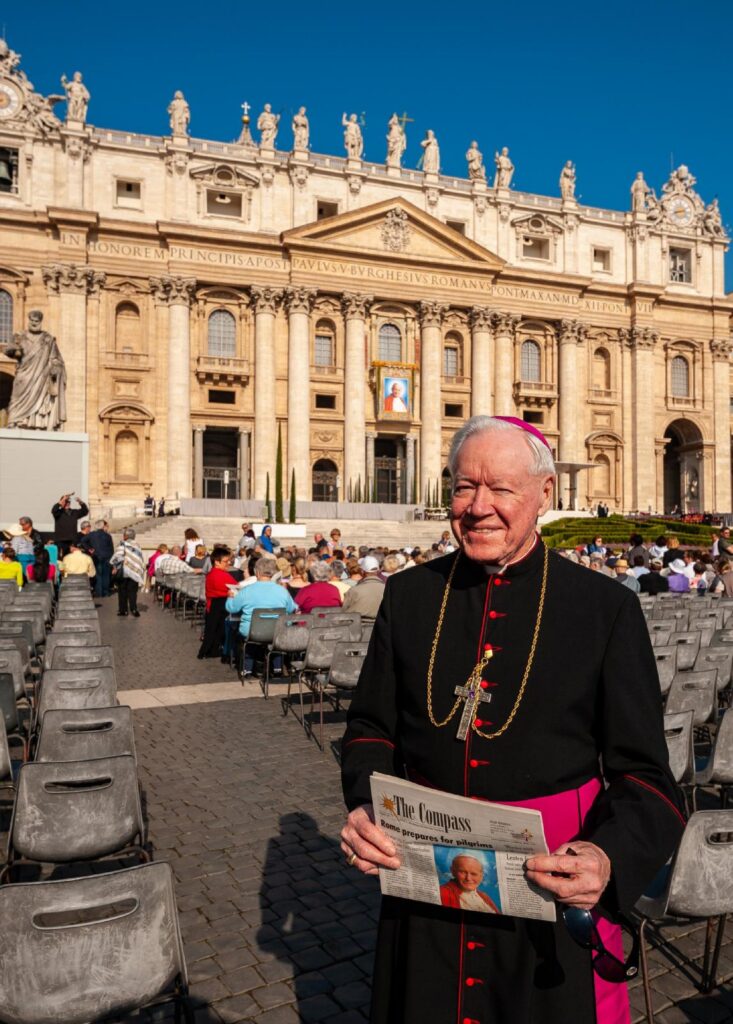
After retirement, Bishop Banks volunteered as priest in residence for two parishes along Lake Michigan.
“It was perfect,” he said. “I could offer some liturgical service; I became a part of the community. The people were wonderful. I think I would have died if I just did nothing. So, it was good for me.”
Right after his 1990 installation, Bishop Banks had to go back to Boston for unexpected heart surgery. When he returned, Sister Ann said, he immediately bought a plot in the Catholic cemetery. When asked why, since he was from Boston, he replied, “This is my diocese, these are my people, and this is where I am going to stay.”
Burial will be at Allouez Catholic Cemetery, less than one mile from the diocesan offices.
Pat Kasten writes for OSV News from Wisconsin.
