


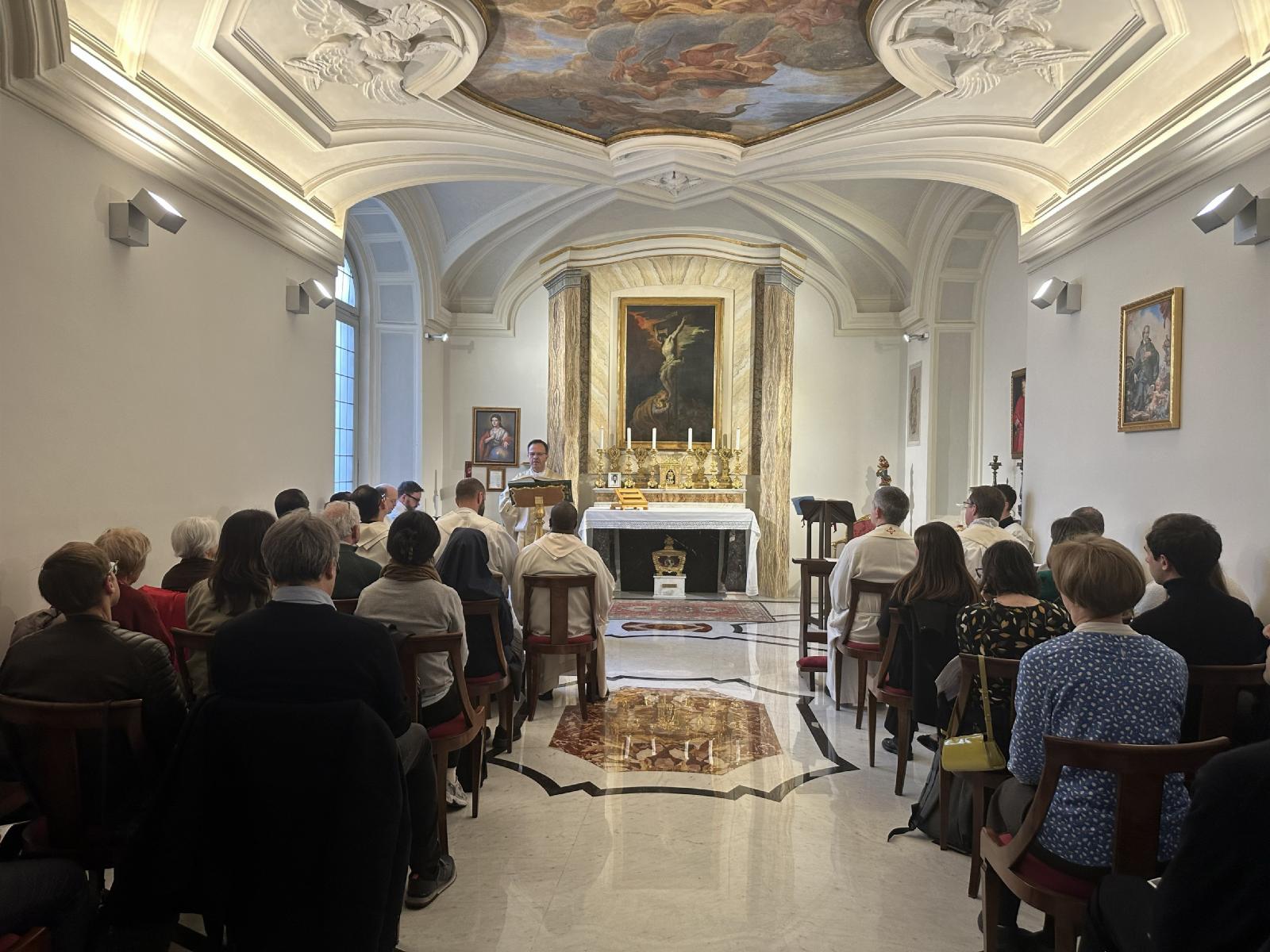
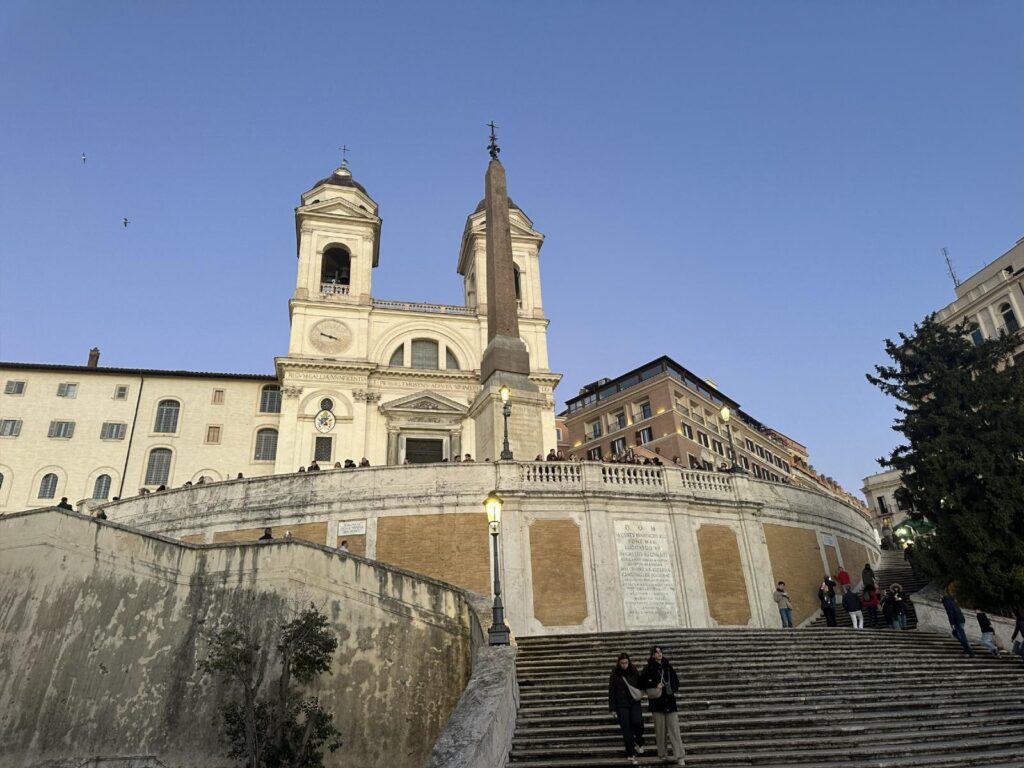
ROME (OSV News) — Around the corner from the Spanish Steps, tucked inside the second floor of Propaganda Fide, the Vatican’s centuries-old missionary headquarters, is the small chapel where St. John Henry Newman offered his first Mass as a Catholic priest after converting from Anglicanism.
In recent years, it has become a little tradition in Rome to celebrate the anniversary of Cardinal Newman’s birthday on Feb. 21, 1801, with a Mass in the chapel organized by the International Center of Newman Friends.
Saint’s 225th birthday
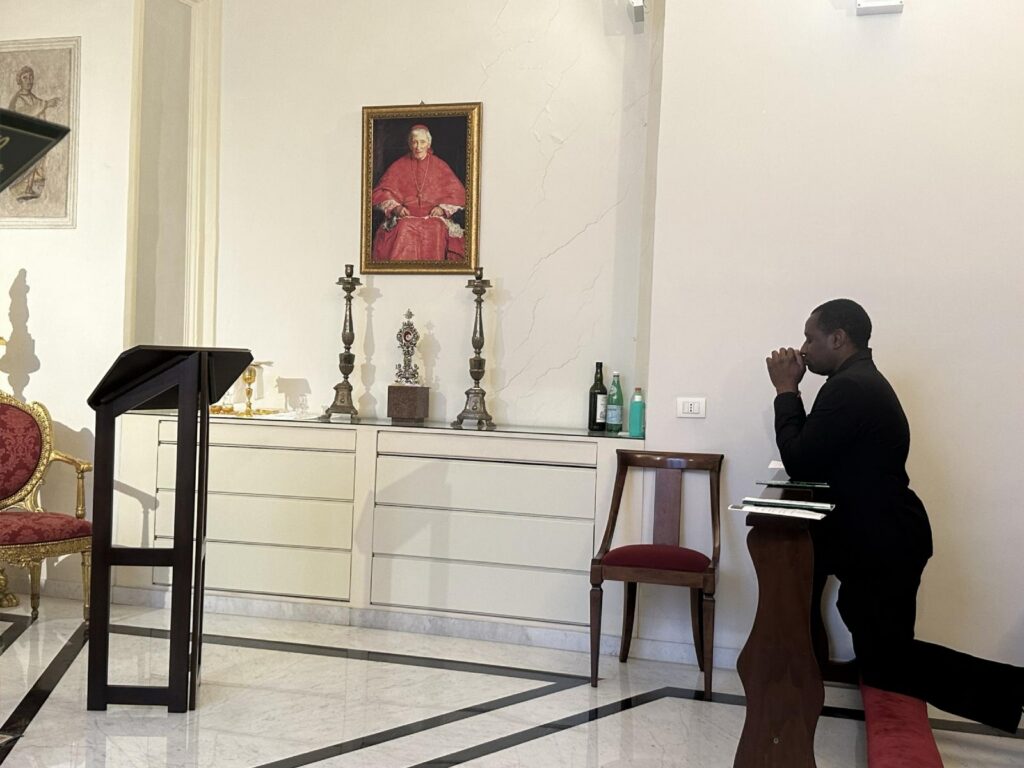
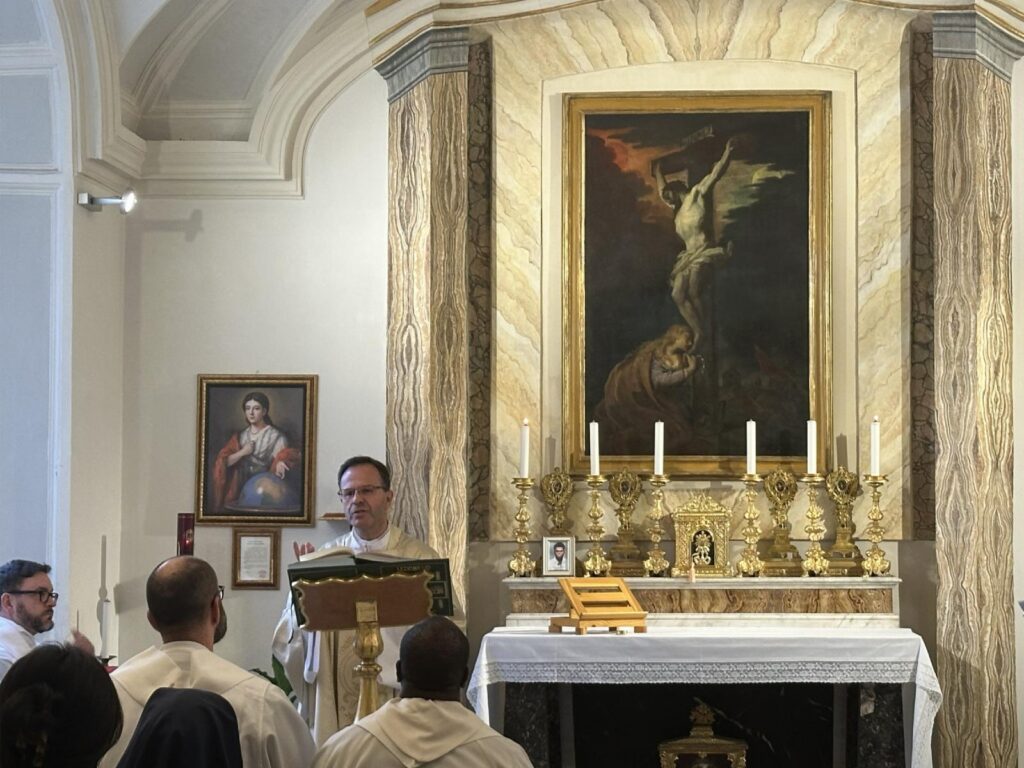
Priests from 10 countries spanning Africa, Asia and the Americas concelebrated the Mass in the Newman chapel this year which took place a few days ahead of Cardinal Newman’s 225th birthday. At the end of the Mass, the congregation received a blessing with a relic of St. Newman, which is kept in the chapel.
“Newman is a saint for our days,” said Father Hermann Geissler, the center’s director, who presided over the Mass. “I think it’s not by chance that Pope Leo named him a doctor of the church.”
One of the central lessons that Cardinal Newman can teach us today, Father Geissler said, is “to learn again to listen to the voice of conscience, that God speaks to every human person.”
Respected Oxford academic
Born in London in 1801, Newman was a respected Oxford academic, Anglican preacher and public intellectual before his conversion to Catholicism, a decision that cost him many friends and estranged him permanently from his sister. He was ordained a Catholic priest in Rome on May 30, 1847, and celebrated his first Mass four days later.
He later founded the Oratory of St. Philip Neri in England and went on to establish schools and the Catholic University of Ireland. His “The Idea of a University” remains a foundational text on Catholic higher education. He died in Birmingham in 1890 at age 89.
Father Geissler noted that it was while living in Rome at the College of Propaganda Fide, which is responsible for the Church’s missionary territories and included England at that time, that St. Newman first encountered the universal scope of the Catholic Church as he was surrounded by seminarians from Africa, Asia, the Americas and Europe.
‘Like a second Pentecost’
“In one of his letters he wrote that here they speak all the languages — it’s just like a second Pentecost,” Father Geissler said. “He wrote, ‘I was happy in Oriel, happier in Littlemore’ … but happiest here in the College of Propaganda Fide.”
G.K. Chesterton would later express a similar sentiment after visiting the missionary college by the Spanish Steps in 1929, writing that he was impressed with “the experience of visiting the College of Propaganda, with its friendly crowd of every race and colour under heaven; a real League of Nations — which did not quarrel.”
Father Geissler said that Cardinal Newman’s contemporary relevance stems from his having anticipated the modern crisis of secularization more than 150 years ago. “He had foreseen that there would come a difficult time when many would give up faith, would no longer trust in God, and even said that an apostasy would come,” Father Geissler said. “But at the same time, he also gave the answers to these challenges in really finding God in his heart, in his conscience.”
Drawing a new generation
That message, Father Geissler said, is drawing a new generation to Cardinal Newman’s writings. “There is a growing interest, above all, among young people, young students, young seminarians — young people who want to follow the Lord.”
As for how Cardinal Newman himself celebrated his birthday, Father Geissler said the saint treated it as a day of reflection. “His birthday often was a kind of day of retreat for him,” he said.
“He thanked the Lord for the graces that he had received in the last year and he looked back and made a kind of examination of conscience — praising the Lord for what we had been given, also asking pardon for what was maybe wrong, and thanking the Lord that he guided him.”
Courtney Mares is Vatican editor for OSV News. Follow her on X @catholicourtney.
