


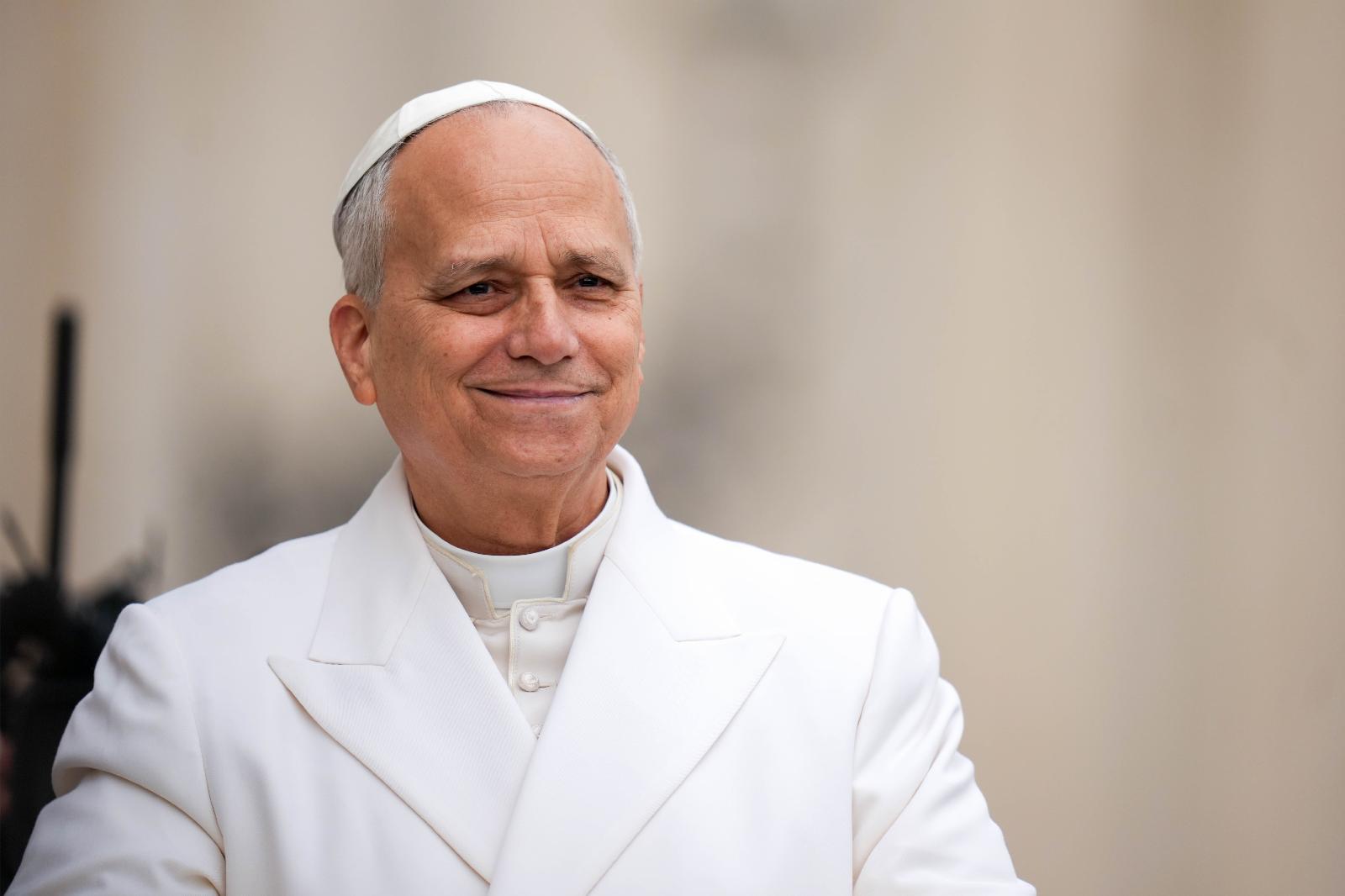
(OSV News) — The following is the full text of Pope Leo XIV’s general audience address given Apr. 1, in St. Peter’s Square.
Catechesis. The Documents of the Second Vatican Council. II. Dogmatic Constitution Lumen gentium. 6. Living stones in the Church and witnesses in the world: the laity in the People of God”
Brothers and sisters, good morning!
Let us continue on our path of reflection on the Church as she is presented to us in the Conciliar Constitution Lumen gentium (LG). Today we will look at the fourth chapter, which deals with the laity. Let us all remember what Pope Francis liked to repeat: “Lay people are, put simply, the vast majority of the people of God. The minority – ordained ministers – are at their service” (Apostolic Exhortation Evangelii gaudium, 102).
This section of the Document seeks to explain, in positive terms, the nature and mission of the laity, after centuries in which they had been defined simply as those who are not part of the clergy or the consecrated life. For this reason, I would like to revisit with you a very beautiful passage that speaks to the greatness of the Christian condition: “Therefore, the chosen People of God is one: ‘one Lord, one faith, one baptism’ (Eph 4:5); sharing a common dignity as members from their regeneration in Christ, having the same filial grace and the same vocation to perfection; possessing in common one salvation, one hope and one undivided charity” (LG, 32).
Before any distinction of ministry or state of life, the Council affirms the equality of all the baptized. The Constitution does not want us to forget what it had already affirmed in the chapter on the People of God, namely that the condition of the messianic people is the dignity and freedom of the children of God (cf. LG, 9).
Naturally, the greater the gift, the greater the commitment too. For this reason, the Council, along with dignity, also emphasizes the mission of the laity in the Church and in the world. But on what is this mission founded, and in what does it consist? The very description of the laity offered by the Council tells us: “The term laity is here understood to mean all the faithful… [who] are by baptism made one body with Christ and are constituted among the People of God; they are in their own way made sharers in the priestly, prophetical, and kingly functions of Christ; and they carry out for their own part the mission of the whole Christian people in the Church and in the world” (LG, 31).
The holy People of God, therefore, is never a formless mass, but the body of Christ or, as Saint Augustine said, the Christus totus; it is a community organically structured by means of the fruitful relationship between the two forms of participation in the priesthood of Christ: the common priesthood of the faithful and the ministerial priesthood (cf. LG, 10). By virtue of Baptism, the lay faithful participate in the very priesthood of Christ. Indeed, “the supreme and eternal Priest, Christ Jesus, since He wills to continue His witness and service also through the laity, vivifies them in this Spirit and increasingly urges them on to every good and perfect work” (LG, 34).
In this regard, how can we fail to recall Saint John Paul II and his Apostolic Exhortation Christifideles laici (30 December 1988)? In it, he emphasized that “the Council, with its rich doctrinal, spiritual and pastoral patrimony, has written as never before on the nature, dignity, spirituality, mission and responsibility of the lay faithful. And the Council Fathers, re-echoing the call of Christ, have summoned all the lay faithful, both women and men, to labour in the vineyard” ( no. 2). In this way, my venerable Predecessor relaunched the apostolate of the laity, to which the Council dedicated a specific Document, which we will talk about later.
The vast field of the lay apostolate is not confined to the Church, but extends to the world. Indeed, the Church is present wherever her children profess and bear witness to the Gospel: in the workplace, in civil society and in all human relationships, wherever they, through their choices, show the beauty of Christian life, which foretells here and now the justice and peace that will be accomplished in the Kingdom of God. The world needs to “be permeated by the spirit of Christ, and more effectively fulfil its purpose in justice, charity and peace” (LG, 36). And this is possible only through the contribution, service and witness of the laity!
It is an invitation to be the “outgoing” Church that Pope Francis spoke to us about: a Church embodied in history, always open to mission, in which we are all called to be missionary disciples, apostles of the Gospel, witnesses of the Kingdom of God, bearers of the joy of Christ whom we have encountered!
Brothers and sisters, may the Easter we are preparing to celebrate renew in us the grace to be, like Mary Magdalene, like Peter and John, witnesses of the Risen One!
Special greetings:
I extend a warm welcome to all the English-speaking pilgrims and visitors taking part in today’s Audience, especially those coming from Nigeria, the Philippines and the United States of America. I greet in particular the students participating in the 2026 UNIV International University Conference. May this Holy Week lead us to celebrate the resurrection of the Lord Jesus with hearts that are purified and renewed by the grace of the Holy Spirit. Upon all of you and your families, I invoke the joy and peace of our Lord Jesus Christ. God bless you all!
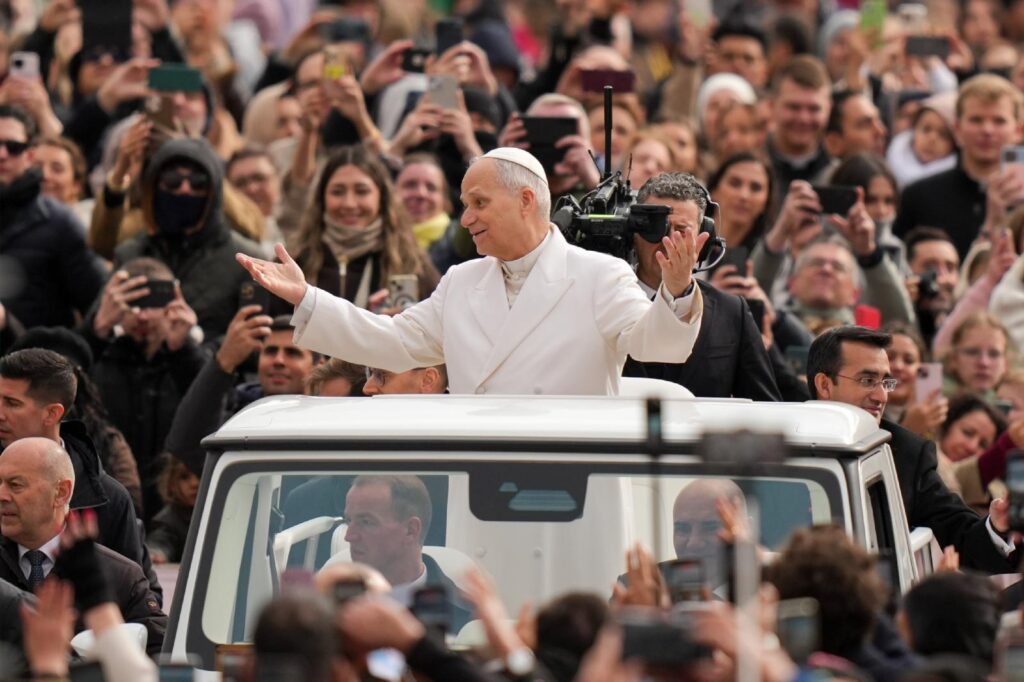
Summary of the Holy Father’s words:
Dear brothers and sisters,
In our ongoing catechesis on the Dogmatic Constitution Lumen Gentium, we turn today to consider the laity. Rather than limiting itself to defining the laity for what they are not, the Second Vatican Council sought to shed light on their innate dignity as members of the People of God and underline the peculiarity of their role in the mission of the Church. Having been incorporated into Christ through Baptism, the laity are made sharers in their own way in his priestly, prophetic and kingly office. The Church is present wherever her children profess the Gospel and bear witness to Christ. For this reason, lay men and women are particularly called to carry Christ’s presence to all spheres of life and so transform them from within by bearing witness to the beauty of a life in Christ and the elevating power of his grace.
