


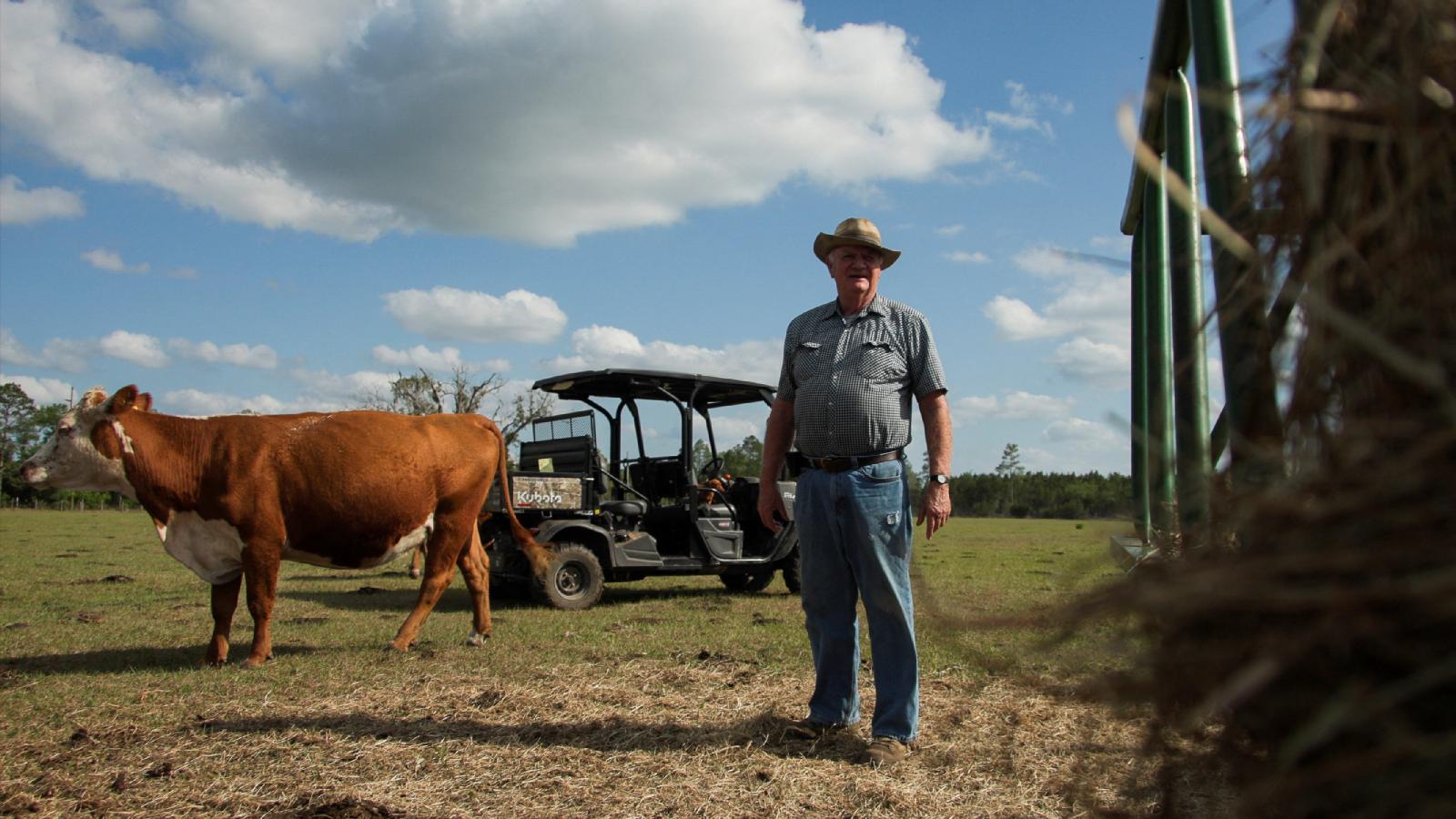
(OSV News) — Farming, even in the best of times, can be a rather precarious vocation. It’s dangerous work, according to the U.S. Department of Labor’s Occupational Safety and Health Administration; it’s economically volatile, due to high production costs and fluctuations in market prices; there are climate risks from droughts, floods, and pests.
And that is not considering the effect of recent tariffs, or the war between the U.S. and Iran that since Feb. 28 has made the price of fertilizer and fuel soar.
The American Farm Bureau Federation’s April 14 report noted, “Rising input costs tied to the conflict in the Middle East are adding strain to an already challenging farm economy.”
The group stated that 70% of American farmers can’t afford all the fertilizer they need, while noting farm diesel fuel prices have increased 46% since the end of February, in turn raising costs for fieldwork, fertilizer transport and irrigation.
As a result, nearly six in 10 farmers report worsening finances — a situation it said indicates “the urgent need for immediate economic assistance to keep farm gates open.”
‘It’s painful — but it’s always something’
So how are Catholic farmers faring?
“I checked in with a couple of our members,” said James Ennis, executive director of Catholic Rural Life, a Minnesota-based organization dedicated to promoting Catholic life in rural America. He told OSV News the farmers he spoke with are large corn, soybean and meat producers.
“For them, it’s painful — but it’s always something,” Ennis said. “One just got finished with planting corn and soybeans. And he said, ‘Jim, I think it’s the best planting weather we’ve had; the soil was just right for planting.’ But he also said, ‘You know, if we don’t get enough rain in a couple of weeks, we’re going to be in trouble.'”
Ennis cited tornadoes, freezes “or other types of weather-related factors that they’re used to.”
So, with the farming vocation comes a certain outlook that is trained to expect the unexpected.
“When I talk to a lot of the farmers who have been farming for a long time, they look at me and say, ‘Jim, this is just a part of our life,'” he said.
“Their faith is deeply rooted in the land and trusting the Lord to provide and help them through a difficult time,” Ennis said. “But the challenges farmers face are somewhat unique, and a lot of things are out of their control — like the price of fertilizer and the price of diesel, the increases; and weather conditions. So, it can be pretty stressful and impact their mental health.”
According to the National Rural Health Association, the suicide rate among farmers is 3.5 times higher than that of the general population.
‘Huge cost shock’ this year
Small properties such as Oxbow Farm — a 17-acre Catholic Worker Farm located in Parkton, Maryland, yielding about 10,000 pounds of annual produce — have been insulated somewhat from the recent economic strain not only by virtue of their size but also their ability, in part, to compost organic fertilizer from the animals living there.
But as the Union of Concerned Scientists has noted, “The vast majority of agricultural production in the United States today is fueled by synthetic fertilizers.” Nitrogen fertilizer is manufactured using fossil gas, while phosphorus- and potassium-based fertilizers are made from mined minerals.
John Dougherty, an assistant professor of economics at Loyola University Maryland who assists his wife and Oxbow Farm manager Julie Laudick Dougherty, said at the beginning of the spring planting season that farmers who had yet to purchase fertilizer would experience an unexpected, “huge cost shock.”
As both a farmer and an economics professor, Dougherty — who earned a doctorate in agricultural, environmental and developmental economics from The Ohio State University– is equipped with a unique perspective concerning the current situation.
Given fuel and fertilizer price increases, “My hunch would be that you would see a significant increase in bankruptcy — especially based off of the timing; based off of all the stress that a lot of farmers are already under,” Dougherty said. “Margins are already really small. Farming is a very competitive industry when it comes to large-scale production.”
Need for more farmers, more small farms
Competitive, but also — say the Doughertys — in need of reform.
“Our food system, as it’s currently set up, has a lot of limitations,” John Dougherty noted. “It’s very efficient in the sense that it can grow a tremendous amount of food for a low price. But it has a whole host of environmental, labor and animal welfare issues associated with it.”
His wife agreed. “What we need more than anything is more farmers and more small farms that are more resilient to this type of thing,” Julie Dougherty said. “Small farms are absolutely capable of feeding our country.”
Rising food prices may lead some consumers to reflect upon the complications of farming and the need for diversification and change, she said.
“But we need to think holistically about how do we make changes slowly, so the most vulnerable in society — who are really struggling with their grocery budget — are not going to go hungry,” Dougherty added. “I think we undervalue food in America a lot. But we can’t just expect everybody to be able to pay higher food prices overnight.”
According to ConsumerAffairs, a customer review and news platform, grocery prices are rising at the fastest rate in four years.
‘St. Isidore, pray for us!’
Deacon Dan Hann, a farmer of 1,400 acres who also ministers in the Diocese of Columbus, Ohio, told OSV News “it isn’t looking very good” for some who till the earth.
“One thing we did right was to buy and pay for chemicals and fertilizer last autumn, thereby locking those prices in,” he said. “We haven’t had any trouble getting those materials. For those farmers who didn’t or couldn’t, they’re going to get hit hard.”
He noted some farmers are selling land, while those who rent it may have to settle for lower returns. And like Ennis at Catholic Rural Life, Hann said weather is always a factor.
“So every year has its challenges and gambles — some years it’s the weather, and other years it’s a global crisis,” said Deacon Hann, appealing to the patron saint of farmers: “St. Isidore, pray for us!”
And indeed, Catholic Rural Life can help with that: The organization’s website contains a selection of spiritual resources.
“There’s a whole tradition of how important it is to pray for our farmers,” Ennis said. “All of us who are of the Catholic Christian faith should be praying for our farmers, and praying for those who are providing food for us.”
He added: “Don’t forget them — they’re often out of sight, out of mind, because we get our food from the grocery stores.”
Kimberley Heatherington is an OSV News correspondent. She writes from Virginia.
