


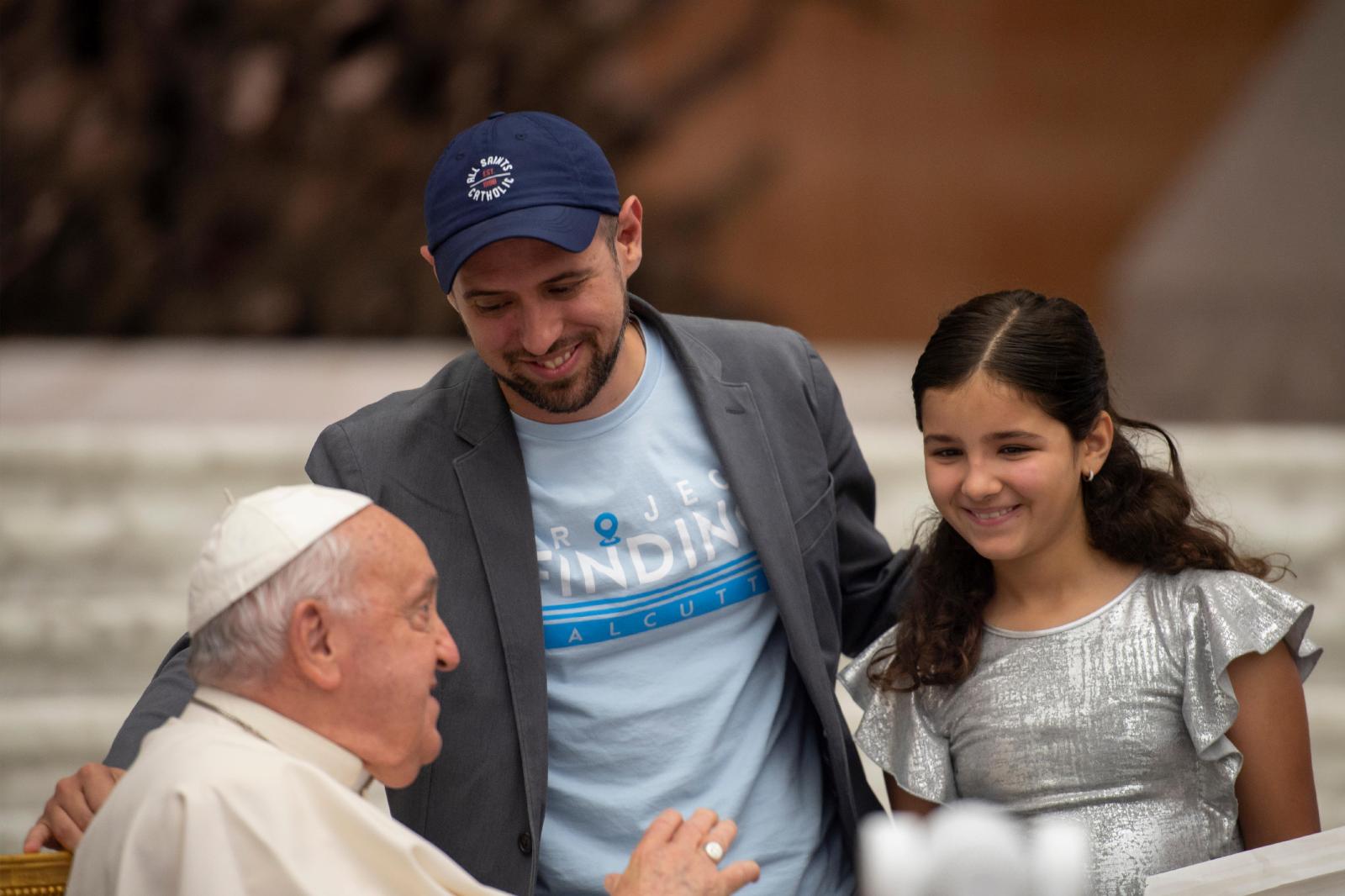
(OSV News) — Even as we are children of God, many of us are creatures of mobile-device habit. Our screen time totals probably prove it.
How does the Catholic Church more effectively reach people through that digital space we live much of our life in, use it to build better human encounters and move them to Jesus Christ’s love, mercy and the sacramental life at the most interpersonal and local of levels?
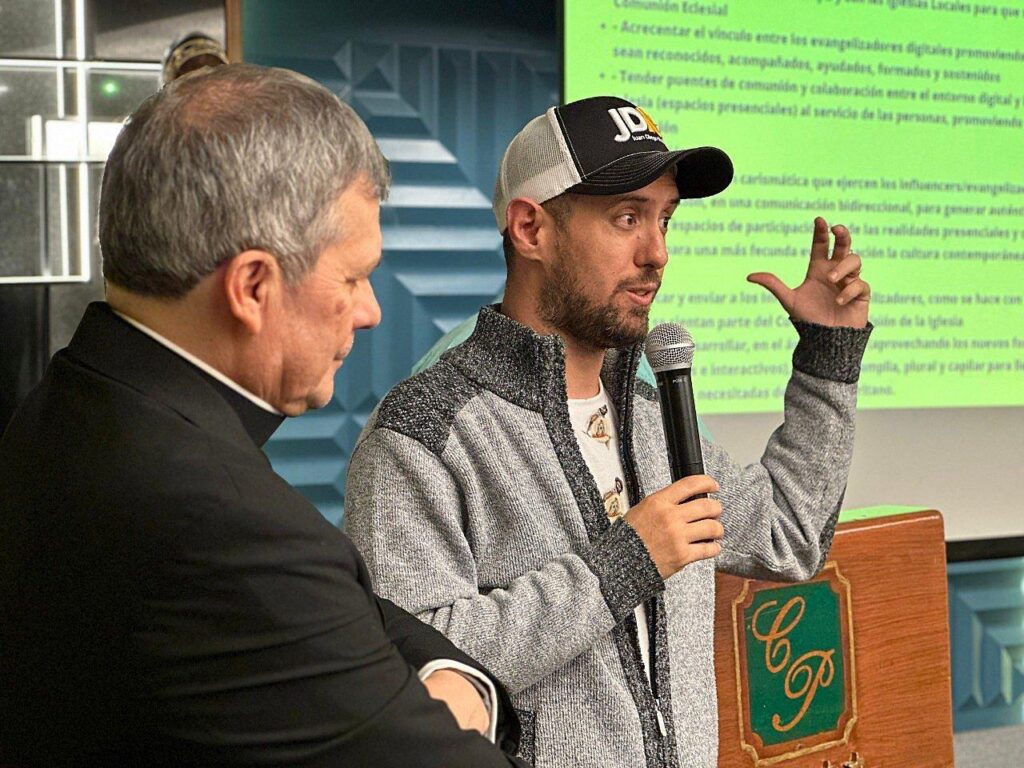
Evangelization Lab, which Dallas-based José Manuel de Urquidi founded, aims to find answers and empower parishes, dioceses and other Catholic organizations with the tools they discover.
“There’s research, there’s something very practical that we’re doing, experiments by ourselves, formation of additional missionaries, things with dioceses,” Urquidi told OSV News.
“We’re very much doing whatever experiments we can run to try to get that message that Christ loves you; you can get off this internet space and into a space where you are in a sacramental loving relationship with Christ and his Church,” Evangelization Lab Digital Missionary Katie Ruvalcaba said.
Evangelization Lab responds to papal calls
Their lab responds to the call that popes have made, from St. John Paul II who said to turn the internet into the “new forum for proclaiming the Gospel,” to Pope Leo XIV‘s call to properly and humanely use technology as an evangelization tool in the recent encyclical “Magnifica Humanitas.”
One of Evangelization Lab’s initiatives involves reaching out to dioceses to train their staff and parishes on how to turn digital presence into a much more active source of interpersonal communication.
“We need to get parishes away from the idea that they just need to maintain things, that their online presence is meant to be a digital bulletin, and rather view it as a mission field,” Ruvalcaba told OSV News. “There are people out there looking for you, and when they get to your front door, physical or digital, are they welcomed and are they received?”
People like Taylor Black, interim president of the Catholic Digital Commons Foundation, are accomplishing what he calls the “hardcore nerd” stuff with Evangelization Lab.
One of their focuses involves how to implement things like artificial intelligence in a way that follows the Magisterium and the teachings of “Magnifica Humanitas.” Black recognizes the dangerous sides of AI, but also believes that proper application as a tool has tremendous possibilities.
“AI has more people asking what it means to be human than I’ve ever encountered. The Church has been asking people to think about this question for a very long time,” Black told OSV News.
“Where a Google search might have resulted in kind of some abstract answers to some of those kinds of very human questions, a thoughtful approach from a diocese using artificial intelligence can do things that are more specifically tuned to the kinds of questions or concerns that the individual is experiencing, and also handily tie them into (their) nearest parish.”
Apostolate works with dioceses for ‘hyperlocal’ evangelization
Evangelization Lab’s work has extended to dioceses ranging from his hometown of Dallas to the Diocese of Columbus, Ohio. Senior director for the Department of Evangelization and Catechesis Marlon De La Torre shares a symbiotic consulting partnership with Urquidi on constructing digital spaces which can help evangelize at the hyperlocal level.
“Any type of a digital apparatus, a device, whatever the case may be, has to have a very formable but sound and clear human connection in order for that digital apparatus to work effectively,” De La Torre said.
“You have to have that human element, and then associate it with a precise digital component that can assist in that process,” he told OSV News. “Once that person journeys through that, then they can come back to that human element, that person, guide, evangelist, catechist to provide more clarity.”
De La Torre amplifies the Evangelization Lab philosophy within his own diocese, focusing each digital platform to lead to the “sacrament of life.” They use it in helping prepare couples for the sacrament of matrimony.
“We send out a video that we’ve produced or messaging through Flocknote or something else that attracts the person. They’re invited and they come through some type of human formation. We have a response through that,” De La Torre said.
“We average about 55 couples a month that go through our marriage preparation, all because of the relationship between our digital platform and our human formation.”
‘You are a digital missionary’
He also says that improved digital engagement has seen increases in new Catholics engaging in the Order of Christian Initiation of Adults, the pathway for becoming fully part of the Church, where digital relationship building has helped them create new human contact and evangelization opportunities.
The Evangelization Lab team says that every one of us who have a digital presence can create that hyperlocal opportunity to accompany people and lead them deeper into the Catholic faith and relationship with Jesus Christ.
“If you are a Catholic and you have an Instagram or Twitter (X) account, you are a digital missionary. The question is whether or not you’re doing it well,” Ruvalcaba said.
“We’re there precisely to evangelize and to bring people to Christ,” Urquidi said. “That’s something very concrete for 20 centuries.”
Jay Sorgi writes for OSV News from Philadelphia.
For more information on Evangelization Lab, visit evangelizationlab.com.
