


WASHINGTON (OSV News) — Why not IVF — in vitro fertilization?
It’s a question asked not only by those outside the Church, but sometimes by faithful Catholics as well.
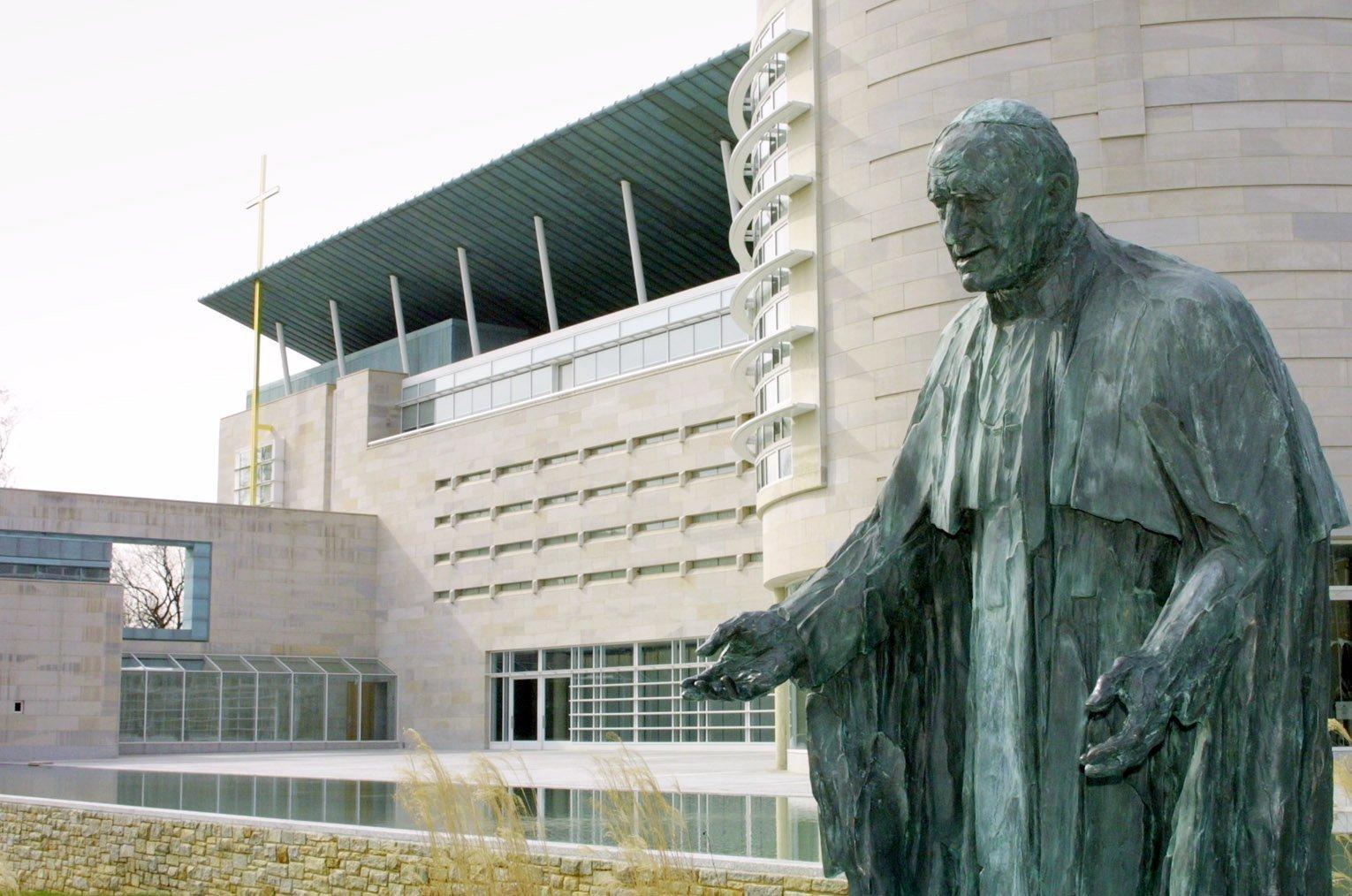
A daylong gathering — “Day of Recollection on Bioethics and the Human Person: Artificial Reproduction, Culture, and Society” — on Jan. 17 at the St. John Paul II National Shine in Washington sought to provide both answers and a framework for discussion.
IVF is a ‘violent process’
Stacy Trasancos is a chemist and author of “IVF is Not the Way: The False Promises of Artificial Procreation” (Sophia Institute Press) — provided attendees with an overview of IVF, characterizing it as “actually a quite violent process.”
And expensive: OVU Global Fertility Network — which bills itself as “the authoritative global fertility network” with 50,000 monthly visitors — notes, “In 2025, a single IVF cycle in the United States ranges between $15,000 and $25,000 when you include medications and common extras.”
Perhaps surprising to some, the Church’s stance with regard to IVF is not new, Trasancos said.
First test tube baby in 1970s
“The Church didn’t just come along in the 1980s — after the first test tube baby came along in the 1970s — and start providing guidance,” she said. “The Church was speaking about this almost a century earlier. I was surprised to learn, in 1897, the Church rejected human artificial fertilization and insemination.”
Trasancos observed that, in the late 1800s, animal husbandry techniques were ushering in other possibilities.
“In livestock, this is typical,” she explained. “This is how they breed better dogs; breed better cows; breed better pigs. They take the gametes from the male and the female; they put them together in the lab; they find the healthiest ones — or the ones with the right genetics that they want for the breed — they put the embryo back into the womb, and it grows.”
Which led to the question: Why not humans, too?
Question brought to Pope Leo XIII
“That was where it all got started — in the ’70s and ’80s, they figured out how to do it, but it was already being discussed much, much before that,” noted Trasancos. “At the time, the pope was Pope Leo XIII, and the question was brought to him. … The question was specifically, ‘May artificial insemination be applied to a woman?’ And he said, ‘No.'”
Further guidance later followed, most notably 1987’s “Donum Vitae” (“The Gift of Life”) from the Vatican’s Congregation (now Dicastery) for the Doctrine of the Faith, and St. John Paul’s 1995 encyclical “Evangelium Vitae” (“The Gospel of Life”).
The Catechism of the Catholic Church is also explicit.
‘Dissociation of husband and wife’
“Techniques that entail the dissociation of husband and wife, by the intrusion of a person other than the couple (donation of sperm or ovum, surrogate uterus), are gravely immoral. These techniques (heterologous artificial insemination and fertilization) infringe the child’s right to be born of a father and mother known to him and bound to each other by marriage. They betray the spouses’ ‘right to become a father and a mother only through each other. … Techniques involving only the married couple (homologous artificial insemination and fertilization) are perhaps less reprehensible, yet remain morally unacceptable.”
Grattan Brown — a theologian, bioethicist, and director of Mission and Ministry at the St. John Paul II National Shrine — said IVF presents a challenge not just of ethics and the definition of what it is to be human, but also of evangelization.
‘Union of body and soul’
“If you think that the person is a union of a body and soul — with a spiritual dimension present from the beginning of that person’s existence — then you recognize a real human presence in the embryo,” he explained. “By contrast, if you think that a person is simply matter; material — an animated body without a transcendent spirit — you’re likely to hold that the embryo is an initial stage of human development that could be stopped without injustice to a real person.”
The Church — following the Gospel, Brown said — stresses “the dignity of every human being, every individual person, from conception to natural death — and recognizes the spouse’s passionate desire for children. So the Church resists any technology that exposes embryos to harm or death, and promotes any technology that heals the body and otherwise addresses the causes of infertility.”
Embryo exposed to ‘death, manipulation’
Artificial reproduction, however, “exposes the embryo produced to death and manipulation, bringing it into existence in a place — a laboratory container — where it cannot possibly survive without another human intervention that transfers the embryo to the womb of its mother, or another woman,” added Brown.
“So, one of the fundamental challenges of Christians,” he emphasized, “is to help those suffering from infertility to recognize the dignity of the embryos that they could produce — and choose, instead, to try a method that heals their bodies.”
Ijeoma Uzoma — a molecular geneticist, author, assistant professor at the University of Nigeria Nsukka and the final presenter of the day — noted that assisted reproductive technology practices vary widely outside America.
Variances in regulation by countries
In Europe, she said, there is generally stronger state regulation, while in Africa, there is rapid expansion of technology with weak regulation, high costs, and limited access. Models are highly diverse in Asia and the Middle East, often shaped by both culture and religion; in China, the process is legal, but under strict control.
Some destinations have, Uzoma noted, become “hubs for reproductive tourism.”
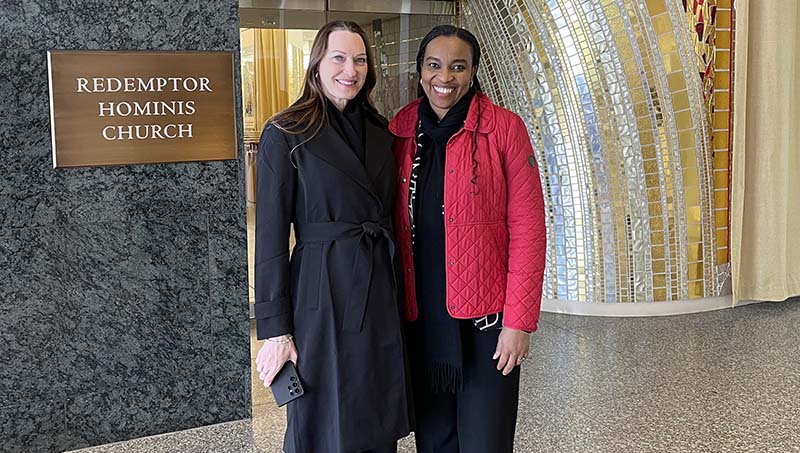
In 2023, Forbes magazine reported the global fertility tourism market is expected to grow at a rate of 30% over the next seven years, from its 2021 valuation of $400 million.
Trump policies to boost birth rates
Since the 2025 start of his second term, President Donald Trump has passed a number of policies aimed at boosting birth rates, including an executive order expanding access to IVF.
All three speakers stressed that, despite the Church’s prohibitions against artificial reproduction, children brought into the world by this technology are good.
“They bear God’s image — just like every other human person who existed, or will ever exist,” said Brown. “They’re destined for redemption of the body, and they’re given some great earthly call. The moral problem,” he concluded, “is with the circumstances in which they were conceived.”
Kimberley Heatherington is an OSV News correspondent. She writes from Virginia.
