


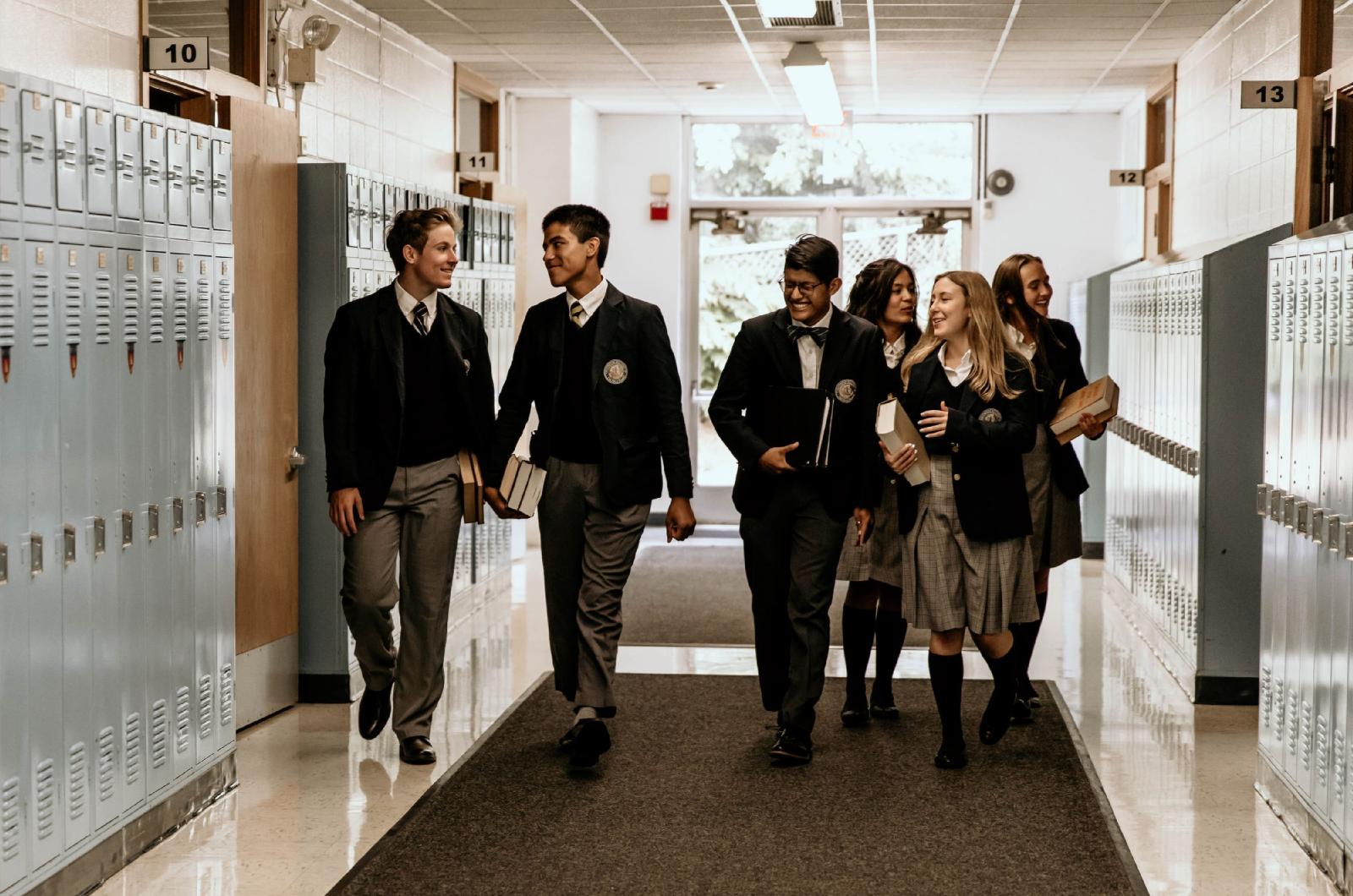
“Without education,” said the Catholic, English writer G.K. Chesterton, “we are in a horrible and deadly danger of taking educated people seriously.”
It’s classic Chesterton: a paradox packed inside a quip that amuses and yet alerts its readers to the fact that critical thinking skills, not always credentials, may be the best definition of the truly learned.
And while it might seem unusual — perhaps even whimsical — that a man who didn’t earn a college degree now has his name attached to a network of over 70 Catholic high schools in the U.S. and abroad. The Chesterton Schools Network’s logo also proudly bears the likeness of Chesterton (1874-1936), who, besides being an autodidact, was an author, editor, philosopher, apologist, and literary and art critic.
“The Chesterton Schools Network unites the growing interest in classical, Catholic education with the entrepreneurial spirit of faithful parents who want to be of service to the Church,” Emily de Rotstein, the Network’s executive director, told OSV News. “We’ve been growing consistently over the last few years, and our pipeline of interested start-up groups wanting to open new schools is only increasing, now internationally as well as in the U.S.”
“What is driving this worldwide, grassroots interest in our model, is a deep desire among parents for an integrated education for their children that is faithful, joyful, rigorous and affordable,” she added.
Schools in 30 states
The first Chesterton Academy — co-founded in 2008 by Tom Bengtson and Chesterton scholar Dale Ahlquist — was planted in St. Louis Park and has since moved to Hopkins, both suburbs of Minneapolis, Minnesota. The men were seeking an alternative to existing high school options and had a mission in mind: to offer a classical, integrated high school education faithful to the Catholic Church and affordable for families of average means.
As requests mounted to replicate its model, the Chesterton Schools Network was formally established in 2013.
At the beginning of 2026, there were Chesterton schools in 30 states and 76 dioceses, with more than 3,000 students enrolled. The list of schools on the Network’s website includes anticipated openings both domestic and overseas. It notes 22 schools slated to open this year, including those in as diverse locations as Tokyo; Barcelona, Spain; and Lagos, Nigeria.
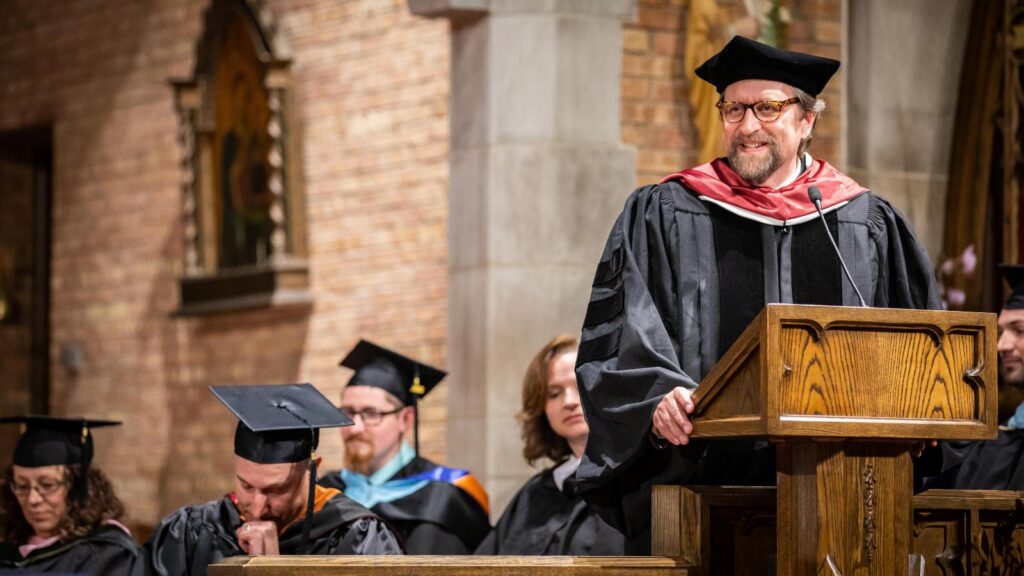
“Parents tell us three things matter most,” said de Rotstein. “They want a school that is unambiguously Catholic with frequent access to the sacraments. They want serious academics that form students to read, write, speak and reason well. And they want a joyful culture where students are known personally and challenged to grow in virtue. Our schools fit the bill.”
But there are other enticements, too.
“Parents are also attracted to our intentionally tech-free environments; students don’t have their devices distracting them all day,” explained de Rotstein. “They engage in deep, real discussions in class with our Socratic seminars and develop authentic friendships with their peers.”
“I think the most impactful thing about any of our schools, though, that you feel the moment you walk in the doors, is joy,” she added. “The kids are smiling and they’re excited to be there. All subjects are taught through the lens of the Catholic faith — and the joy of the faith permeates the culture of our schools.”
Intellect, character, spirituality
The Network’s model is built on three pillars: intellect (teaching the classics of Western thought); character (students are helped to grow in the four cardinal virtues of prudence, temperance, fortitude and justice); and spirituality (embracing the truth that students exist to know, love and serve God).
A gold seal of sorts was recently awarded when the Chesterton Schools Network received the 2025 Yass Prize, viewed as the “Pulitzer of education innovation.” Supported by the Center for Education Reform since 2021, the $1 million prize will be used to both strengthen resources and support current schools, while launching an ambitious 15-year plan to grow to 1,000 schools worldwide by 2040.
Judges were unambiguously enthusiastic about the entrepreneurial nature of the Network: “What truly differentiates CSN … is its turnkey delivery model: parent groups with no prior experience can launch a fully formed high school in as little as 18 months and at a fraction of typical startup costs … proving that a high-quality, human-centered education can scale quickly without sacrificing depth or excellence,” the award’s website stated of the Chesterton Schools Network.
“These are secular educators who are recognizing that what we’re doing is transforming the options that parents have,” said Joseph Grabowski, the Network’s vice president of evangelization and mission.
“We’re definitely riding the waves of this increased interest in school choice that is happening nationwide,” he said. “That will only lead to greater demand for high schools like ours when people realize that the affordability factor is less of an issue than maybe it used to be.”
Affordable tuition
So how is tuition — which varies by location — kept affordable?
“Our schools prioritize spending on recruiting and retaining exceptional school leaders and faculty who are passionate about their faith and the subjects they teach,” de Rotstein said. “Member schools operate in modest buildings made beautiful through books and sacred art. The involvement of parents and other volunteers help keep administrative and overhead expenses low.”
That re-use and re-purpose model can be seen throughout the Network — including at the Chesterton Academy of St. Louis in St. Louis, Missouri. It occupies the entire lower level of the St. John Bosco Parish Center, where the adjacent church was closed in 2023.
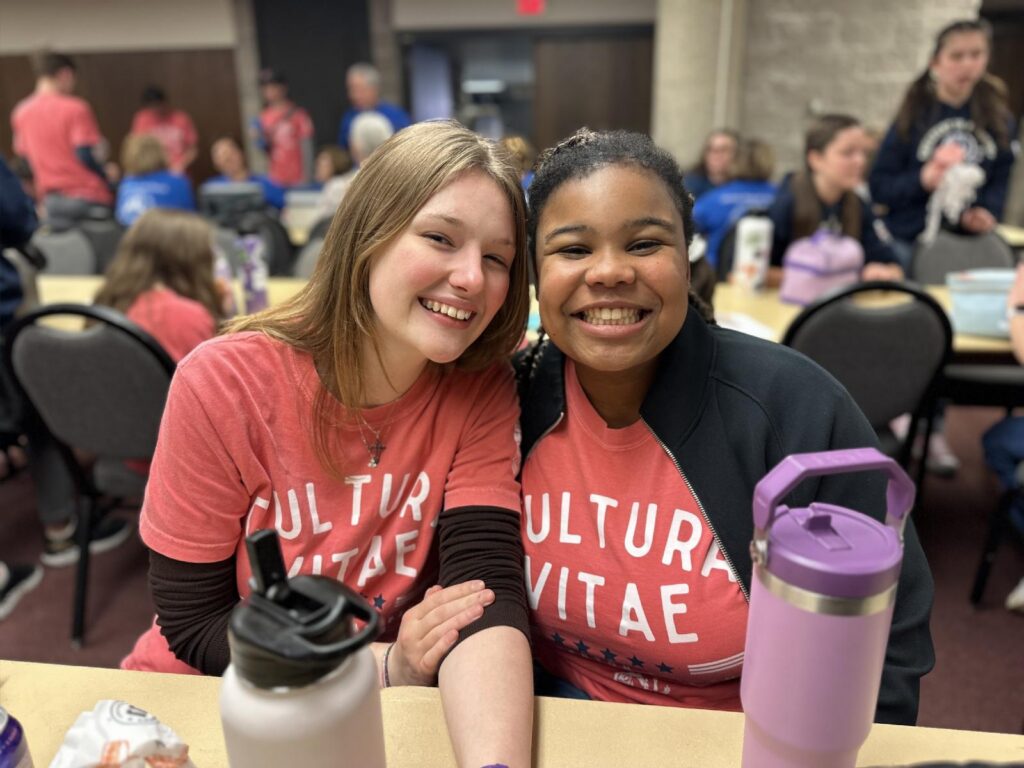
Maria Jansen — Chesterton Academy of St. Louis’ executive director, one of its founders, and a mother of six — failed in her attempt to convince the local classical grade school to add a high school.
“So I and a group of other people who felt the same way looked into the Chesterton Schools Network and went to a discovery day, which is a meeting they have before you fully make the decision to jump on board,” Jansen explained. “And we were blown away with just the beauty of the model, the beauty of the integrated curriculum. And it had such great vehicles of supporting joy in the community.”
‘Great way’ to start a school
Chesterton Academy of St. Louis began classes in 2023 and will have its first graduates in 2026. Eighty-six students attend, and close to 100 — if not more — are expected in the next academic year.
Jansen’s advice to others?
“I would say if you do feel called to start a school, this is a great way to do it because there’s so much support — not just from the Network, with all the structure and wisdom that’s there from the past 15 years — but even just the support network between the school founding teams.”
Harrison Brehm, headmaster of Chesterton Academy of Sacramento in North Highlands, California, said the authenticity of the Network’s model is evident to parents.
“I think a lot of people are seeing something that is successful, that is as faithful as possible to being a positive Catholic school — not a Catholic school ‘sort of’; not just teaching religion as one class — but where the faith permeates,” he said. “It permeates all of the classes, all of the disciplines — history, literature, arts. It’s a whole community; we’re starting every day in Mass and prayer together, and that has an effect.”
Brehm paused.
“I think what’s drawing more and more people to this, is how sincerely we’re doing it,”he said.
Housed in a closed elementary school adjacent to St. Lawrence the Martyr Catholic Church, Chesterton Academy of Sacramento was launched in 2022 with the enthusiastic advocacy of Father Father Alvaro Perez, pastor of St. Lawrence and a Pro Ecclesia Sancta priest originally from Peru.
“The pastor had been involved or affiliated with Chesterton Academies elsewhere, including the original Chesterton Academy in Minneapolis,” Brehm said. “He is just an avid supporter of the Chesterton model of school, and was enormously eager for us to come and set up shop here to share this campus.”
In four years, enrollment has doubled to 55 students.
“I have heard parents tell me so many times that they wish they could have this education,” Brehm said.
Like-minded families
In Rochester, New York, the Chesterton Academy of Rochester — with its 33 students — also occupies a former Catholic elementary school.
“The pastor had announced that the school was going to close,” said David Klosterman, the school’s headmaster who also teaches math and Latin. The academy had been renting space at a Catholic high school down the street, but leasing the former elementary school gave the student body access to Mass at the adjacent Christ the King Catholic Church.
“The parishioners many times have mentioned to me and other teachers how happy they are to see Catholic, high-school-age kids going to Mass and very clearly reverent in understanding why they’re there, and why it’s such an important part of their day,” Klosterman said.
That integration of the sacraments and scholarship creates cohesion, he said.
“We do pride ourselves on the high quality education we give the students, but there is something more — there’s a community of like-minded families,” he explained.
“Parents know their kid is going to a school where other students in their class are also thinking about the same important things in life, encouraging them to grow and to be faithful to the commandments we all need to hold as Catholics,” he said. “It’s a really special place.”
Kimberley Heatherington writes from Virginia.
