


CHICLAYO, Peru (OSV News) — In the northern city of Chiclayo, the sights and sounds of excitement were palpable as crews worked on setting up large screens outside St. Mary’s Cathedral. Locals leaving Mass lingered in the square to photograph City Hall lit in the Vatican’s yellow and white.
Signs were peppered across the city proclaiming Chiclayo as “The Capital of Friendship” and the “City of Pope Leo XIV.”
It’s clear that when the pope arrives Nov. 13, it will be a welcome like no other, and that the memory of the American-born pontiff’s eight-year tenure as bishop has created a profound sense of shared ownership.
Nowhere is this devotion more vividly seen on display than in the narrow side street of the cathedral, where two neighboring establishments claim a personal connection to Pope Leo.
A table in Bishop Prevost’s history
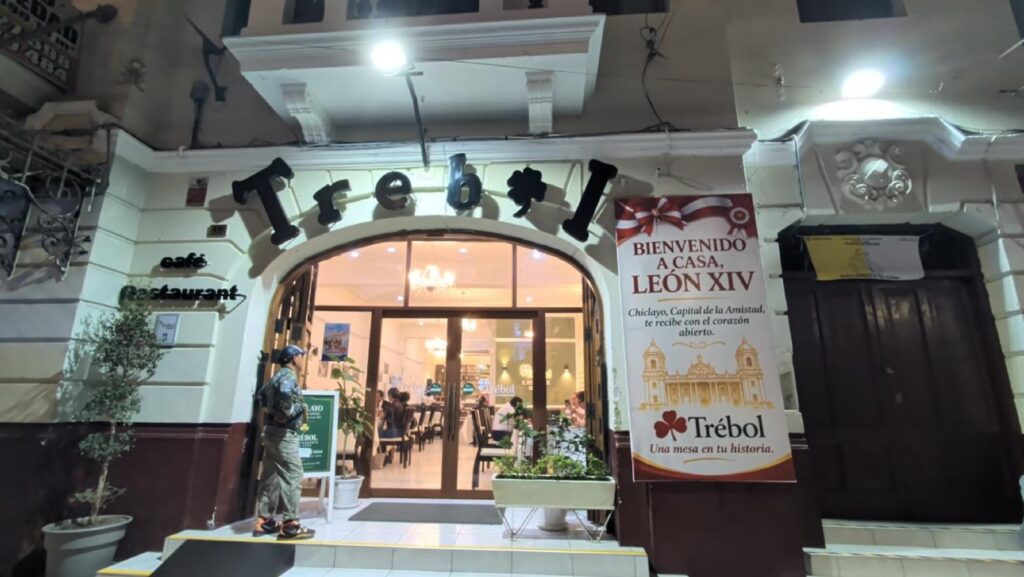
El Trébol, a restaurant that has been operating for several decades, calls itself “the pope’s restaurant.” A large sign outside the restaurant welcomes the pope back to Chiclayo and signs off with “Trebol: A table in your history.”
In the restaurant’s case, that table is specifically Table 3, which, since Pope Leo’s election, has become something of a local landmark known as “The Blessed Table.” Adorned with mementos, diners sitting at the table can read the excerpt from the pope’s first speech greeting his beloved Diocese of Chiclayo.
The kind waiters and waitresses will explain the dishes, then immediately tell diners the pope’s favorites, including “Seco de Cabrito,” a slow-cooked goat stew, and “Frito Chiclayano,” a traditional Sunday breakfast with fried pork, boiled sweet potatoes, and an onion salad.
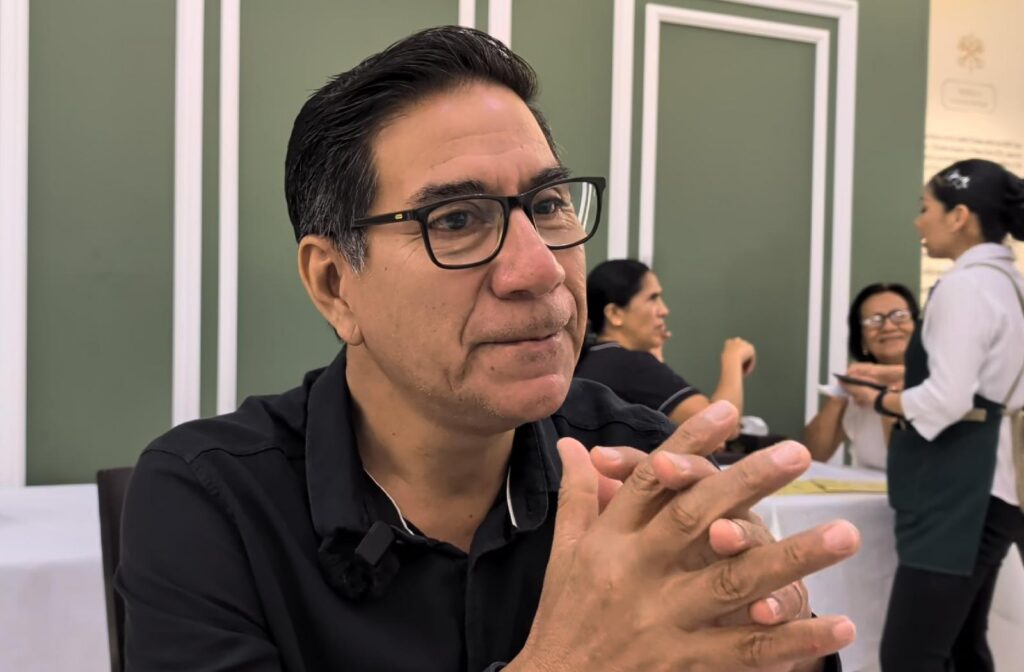
“We didn’t create a restaurant for a pope, nor a table for a pope,” Eduard Montoya, who has run El Trébol for the past 11 years, told OSV News Nov. 9. “Circumstantially, history and time made it the pope’s restaurant.”
Las Américas, cabrito and another ‘papal’ table
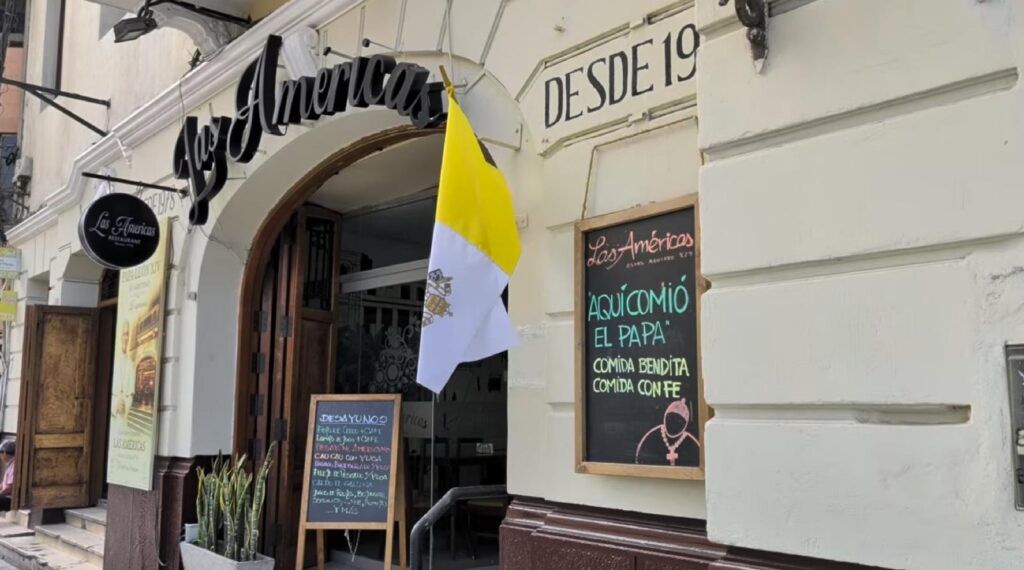
However, just next door sits Las Américas, which bills itself as “the restaurant where Pope Leo XIV really ate.”
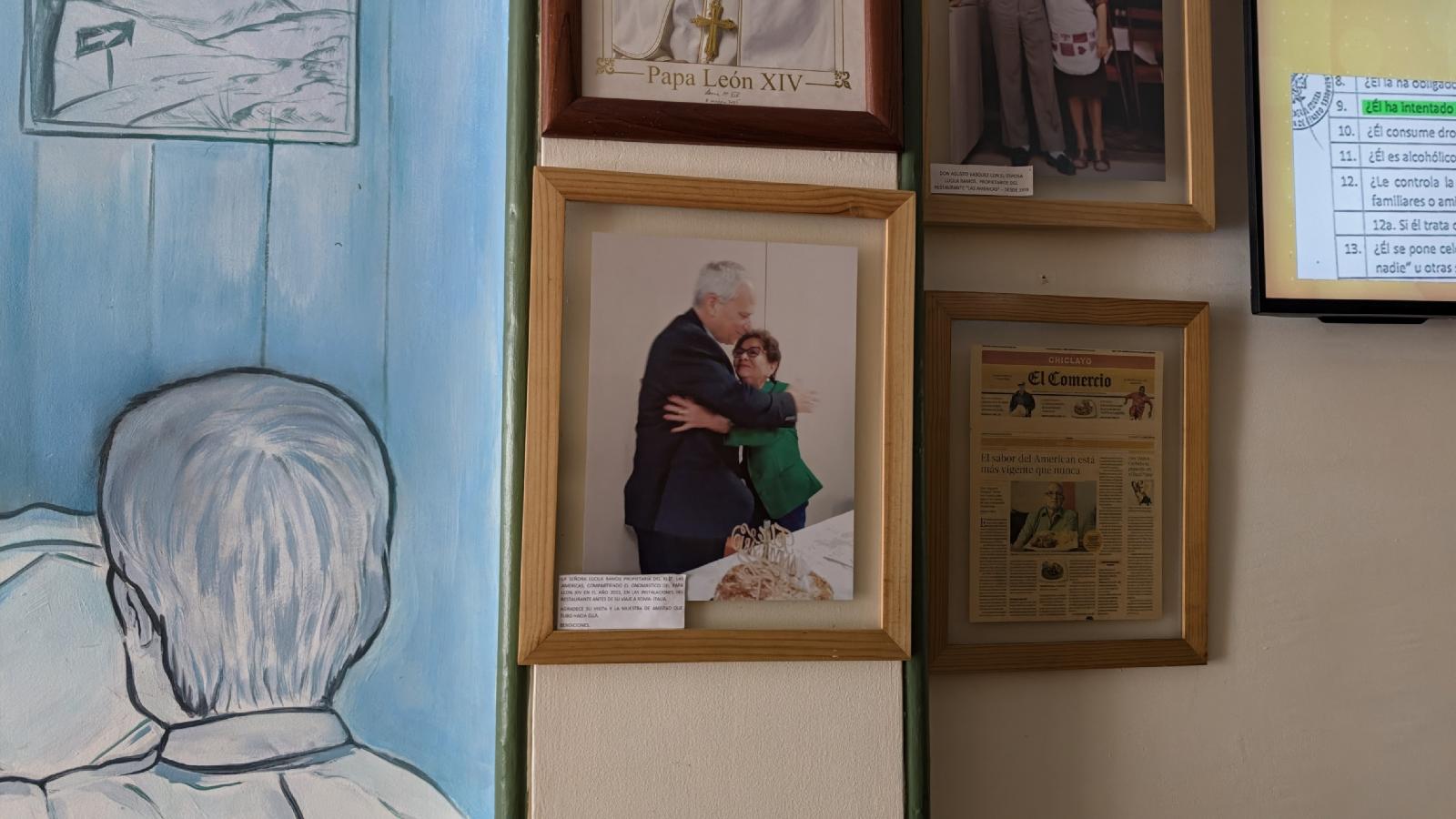
Oscar Ramirez Flores, 60, who has worked as a waiter at Las Américas for four decades, walked into the dining room at age 20 and has watched the neighborhood evolve ever since. While Las Américas advertises itself as the spot where the pontiff actually went, Ramirez points out a framed photograph on the wall showing the restaurant’s owner with then-Bishop Prevost.
“I’ll be sincere with you: I probably served him only once. He didn’t come often,” Ramirez told OSV News Nov. 9, noting that the diocesan chancery was nearby. “He was reserved about his meals. The priests and the bishop ate there. They had their cooks, so he hardly ever went out” to eat.
When the future pope did sit down at Las Américas, Ramirez recalled serving him a northern Peruvian staple.
“I remember him eating cabrito (braised goat) like a good Chiclayano. He has his Chiclayo national ID card,” Ramirez said. “He was a very good person, very serious as a human being. At that time he was bishop — we never imagined he was going to be pope.”
The dueling signs outside the neighboring eateries hint at long-standing friction over historic names and marketing claims. Ramirez admitted that El Trébol’s heavy publicity blitz was pretty good.
Pope Prevost — a real Chiclayano
For his part, Montoya maintains there is no bad blood and that both restaurants prove how deeply “Padre Roberto,” as the pope was known locally, wove himself into the fabric of daily life.
“You walk down the streets of Chiclayo: ‘Here’s the tailor where the pope dressed,’ ‘Here’s where the pope got his hair cut,'” Montoya told OSV News. “Prevost was with us for eight years. It’s not like they were sending him vestments from the Vatican. He’d say, ‘Recommend a tailor, recommend someone to cut my hair.’ There’s the barber, Mario, or the dentist who treated him. I don’t see it as people trying to jump on the bandwagon — it’s just the truth.”
During his years leading the Diocese of Chiclayo, the then-bishop was renowned for his hands-on presence. Montoya recalled the future pope wading through regional flooding during the 2017 El Niño storms, mobilizing aid during the pandemic, and riding a mule into the rugged Andean highlands of the Cañaris and Incahuasi districts, to reach isolated Indigenous communities, who mainly spoke the Quechua language.
When he sought a break from church offices just down the street, Montoya recalled, the bishop would walk over, sometimes accompanied by others, to finish church business over breakfast and a plate of “Frito Chiclayano” goat stew.
“I don’t doubt that he ate at my neighbor’s, just as he had fresh juice at the central market, bought bread at Don Benito (a local bakery), and got his shoes shined in the park,” Montoya said, brushing off any sign of animosity with Las Américas.
Padre Roberto becoming Pope Leo
Recalling the day of the pope’s election, Montoya told OSV News that the cathedral bells pealed across Chiclayo as residents flooded the streets, embracing and crying, stunned that their “Padre Roberto” was now sitting on the throne of St. Peter.
Once national television descended on the city, he explained, cameras swarmed El Trébol, cementing its moniker as “the pope’s restaurant” in Peruvian media. Montoya recalled that one former waiter was dubbed “the pope’s waiter” and became somewhat of a celebrity after telling reporters that while the former bishop of Chiclayo would not leave a cash tip, he always left his blessing.
Next door, Ramirez watched the same broadcast with great pride, especially when the pontiff bypassed the usual Italian formal address of the new pontiff to greet his former flock in Spanish.
“Imagine that when he won, the first thing he mentioned was his Diocese of Chiclayo,” Ramirez said, noting how the pope’s birthplace, Chicago, sounded almost identical in the announcement. “There were people crying with emotion.”
Hopes that the pontiff brings calm to his beloved Peruvian city
Now, as Chiclayo prepares to welcome the pontiff back for his upcoming pastoral visit, the debate over dining tables has given way to broader hopes for the city. For Ramirez, the return of their former shepherd is a much-needed blessing for a community grappling with rising street violence and organized crime.
“As God’s representative on earth, I hope he brings us peace,” Ramirez said. “We are hurting from contract killings and extortion. Hopefully he brings peace and people reconsider.”
When asked by OSV News what Pope Leo’s return to Chiclayo meant for him, Montoya said: “It means the love he has for this land, and for us, an enormous joy and satisfaction to have him home again.”
“The message being shared here is that he isn’t just visiting Chiclayo — he is returning home,” he added.
When asked what they would do or say if Pope Leo stopped by to visit, neither establishment planned on holding back from showing their love and appreciation.
Montoya told OSV News he would simply ask for the pope’s blessing. For his part, Ramirez has a greeting equally fit for the city of friendship.
“I’d give him a hug,” Ramirez said. “A hug that I don’t think Pope Leo XIV would deny me.”
Junno Arocho Esteves is an international correspondent for OSV News. Follow him on X @jae_journalist.
