


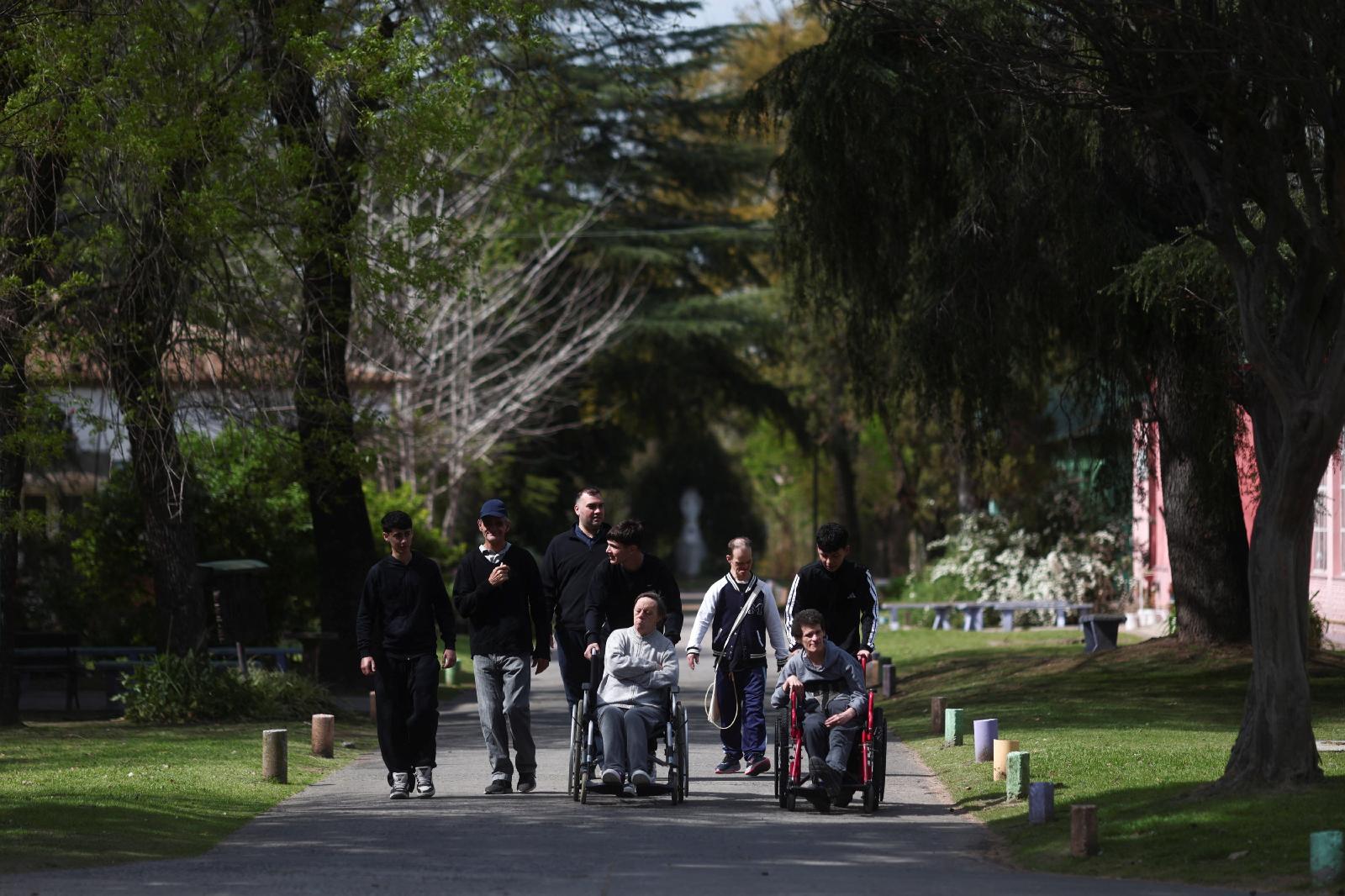
ROSARIO, Argentina (OSV News) — When Pope Leo XIV enters the Don Orione “Little Cottolengo” on the outskirts of Buenos Aires Nov. 9, he will visit a place whose modest name bears little resemblance to its scale.
Spread across nearly 124 acres in Claypole, south of Buenos Aires, Argentina’s capital, Pequeño Cottolengo, as it’s known locally, has internal streets, a plaza, a church, homes, classrooms, clinics and workshops. Some 415 people with physical and intellectual disabilities live there, supported by approximately 400 employees. The institution describes itself as a “city of charity.”
“Cottolengo” comes from the name of St. Joseph Benedict Cottolengo, an Italian priest who in 1832 opened the Little House of Divine Providence in Italy’s Turin to receive people who were sick, poor or living with disabilities. St. Luigi Orione adopted the name for the homes his congregation, Little Work of Divine Providence, established for people needing comprehensive care.
The cornerstone for the Claypole home was laid by Don Orione himself in 1935. Today it is the largest residential center in a network of 14 Cottolengos serving approximately 1,300 people in Argentina, Uruguay and Paraguay.
Pope Leo’s brief visit will include an encounter with residents and staff in the institution’s shrine, where Don Orione’s heart is preserved. Brother Jorge Silanes, the home’s director, said organizers will remove the pews “so we can fit as many wheelchairs as possible.”
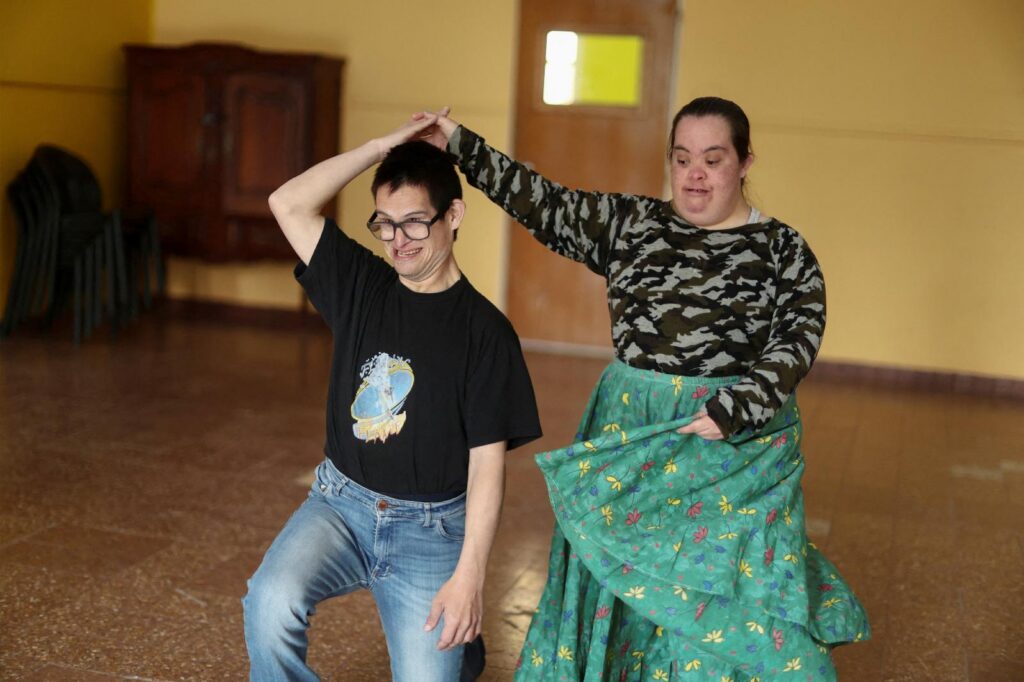
“We want people with disabilities to be the protagonists,” he said to Agence France-Presse.
Yet the visit comes amid a bitter national dispute over disability policy and government spending.
Dispute between disability centers and health care officials
President Javier Milei’s administration argues that extensive audits were necessary after serious irregularities were uncovered in the disability pension and health care systems. An official government report said the number of noncontributory disability pensions had grown from 79,000 in 2003 to more than 1.2 million in 2023, with tens of thousands of cases presenting possible incompatibilities.
Judicial investigations have also examined alleged political favoritism and improper contracts under previous and current administrations — Milei’s first head of the disability office has been prosecuted for misusing funds — making the system’s dysfunction difficult to assign neatly to one political party.
But efforts to restructure and audit that system have also produced documented consequences for people with disabilities and the institutions caring for them.
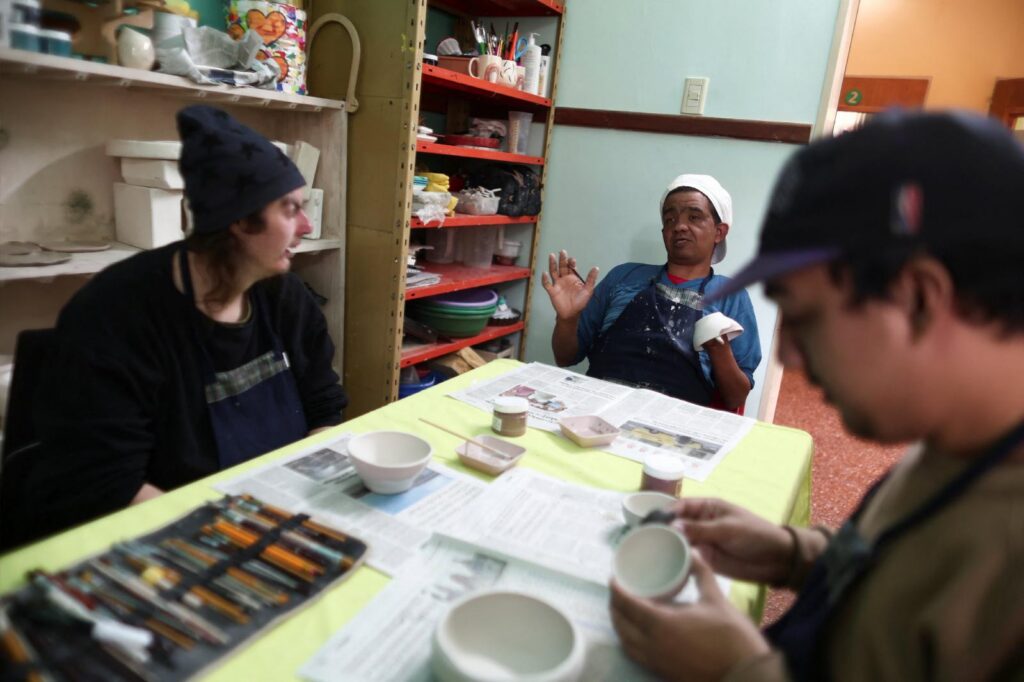
The Cottolengo said deliveries of medicines, diapers and other supplies through the federal Incluir Salud program stopped in late 2025. In April, Argentina’s bishops warned the national health minister that delayed and inadequate payments had placed the continued care of some 1,200 Cottolengo residents in “real and immediate danger.”
Days before the papal visit, a federal judge ordered the freezing of 828 million pesos, or $536 million, in Health Ministry accounts to cover obligations to the Claypole institution. The government subsequently said it had authorized payment of the disputed amount.
The episode illustrates the tension surrounding the papal stop: Fiscal controls may be necessary, but delays involving anticonvulsants, antipsychotic medications, specialized food and diapers are not abstract accounting problems for residents who require daily assistance.
Papal visit ‘a very strong sign for Argentine society’
Bishop Jorge Lugones of Lomas de Zamora, whose diocese includes Claypole, called Pope Leo’s choice “a very strong sign for Argentine society.”
“The Church does not forget human suffering, those who today need greater attention,” he said.
Government officials have rejected suggestions that the pope intends the visit as a rebuke to Milei.
Sandra Pettovello, Argentina’s minister of human capital, said Pope Leo would address pastoral concerns, “the protection of the vulnerable” and poverty, but would not intervene in domestic politics.
“Making any interpretation directed at the government is not understanding the Vatican and not knowing the work and responsibility of the pope,” she said.
Papal itineraries are developed through consultation rather than by the pope alone.
‘Local bishops propose, Vatican decides’
Yago de la Cierva, head of the national organizing committee for Pope Leo’s 2026 visit to Spain, previously described the process to OSV News succinctly: “The local bishops propose, and the Vatican decides.”
Claypole nevertheless fits a pattern established during Pope Leo’s earlier journeys. In Africa, he visited an orphanage, nursing homes and a psychiatric hospital.
In Spain, he met people experiencing homelessness, migrants and prisoners. In France, he visited Maison Bakhita, which assists migrants and other vulnerable people, and met sick pilgrims at Lourdes.
In his May encyclical, “Magnifica Humanitas,” Pope Leo wrote that society’s “rejected stones” — including “the poor, the sick, the migrants and the least among us” — must become its cornerstone.
The political debate surrounding Claypole will not disappear when the papal motorcade leaves. But for 45 minutes, those usually discussed as pension files, beneficiaries or budgetary costs will be placed where the Cottolengo wants them: at the center of the story.
Inés San Martin writes for OSV News from Rosario, Argentina.
