

(CNS) — From horse-drawn ornate wooden carriages to a bulletproof all-electric vehicle, the papal modes of transport have evolved to keep the pope safe, seen and saving the planet.
The first time a car was offered to a pope was after the 1903 election of St. Pius X when the Archdiocese of New York donated one, said Sandro Barbagallo, curator of historical collections at the Vatican Museums.
“But the pope refused it,” he told reporters at a new exhibit featuring select popemobiles Oct. 28.
The pope politely declined the gift, he said, in part because a car was useless at the time since a dispute with the Italian government over the sovereignty of the Holy See kept popes confined to Vatican City from 1870 to 1929, and because he preferred walking in the Vatican Gardens and hearing “the sound of horses’ hooves along the path rather than the sound of an internal combustion engine.”
However, the pope’s limited opportunities to travel didn’t stop other eager Catholics from wanting to share this new invention; an association of Catholic women in Milan gave Pope Pius XI, who was elected in 1922, a car made by the Italian manufacturer Bianchi, which was expanding from making bicycles and motorcycles to automobiles.
When the 1929 Lateran Pacts finally allowed popes to go freely outside Vatican City walls, many car manufacturers started competing to give the pope a car, Barbagallo said, “so they could boast the title of supplier to the papal household.”
The first car that arrived immediately after the signing of the Lateran Pacts was a U.S. Graham-Paige 837, he said. Pope Pius XI ventured out in it — becoming the first pope to put the rubber to the road — to St. John Lateran to celebrate Mass to mark the 50th anniversary of his ordination.
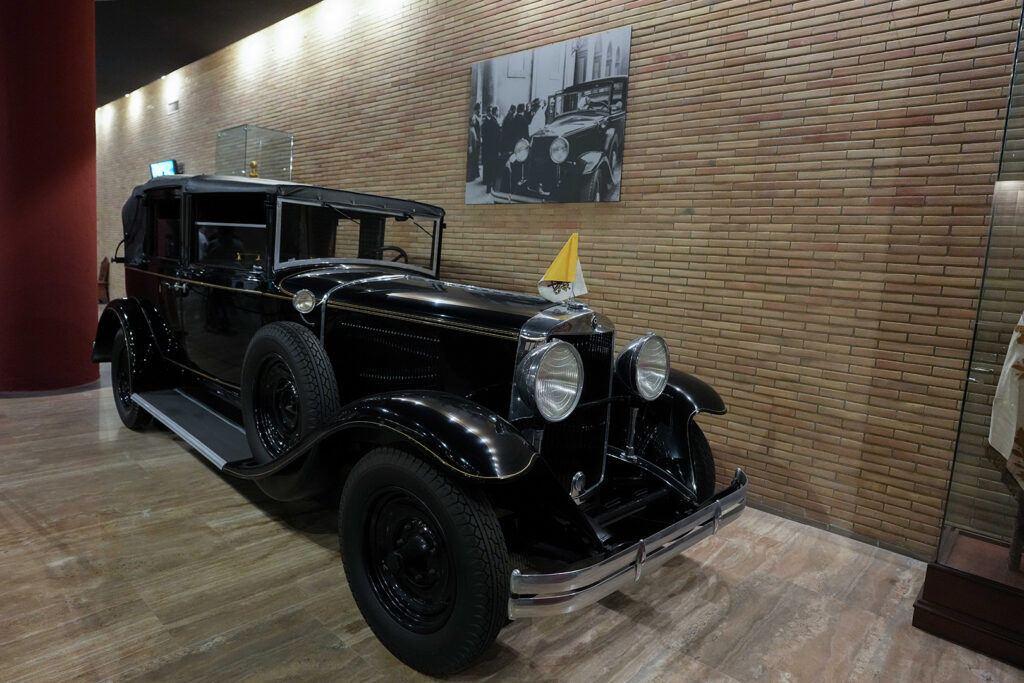
Shortly thereafter, a Citroën and a Mercedes-Benz arrived, Barbagallo said, “but the Mercedes was already a cut above” all the others because it had been “specifically tailored for the pope.”
For example, he said, the Graham-Paige was just a standard model whose backseat had been replaced with a single seat. And even though it is an elegant, beautiful vehicle, “it looks more like a gangster’s car when you see it.”
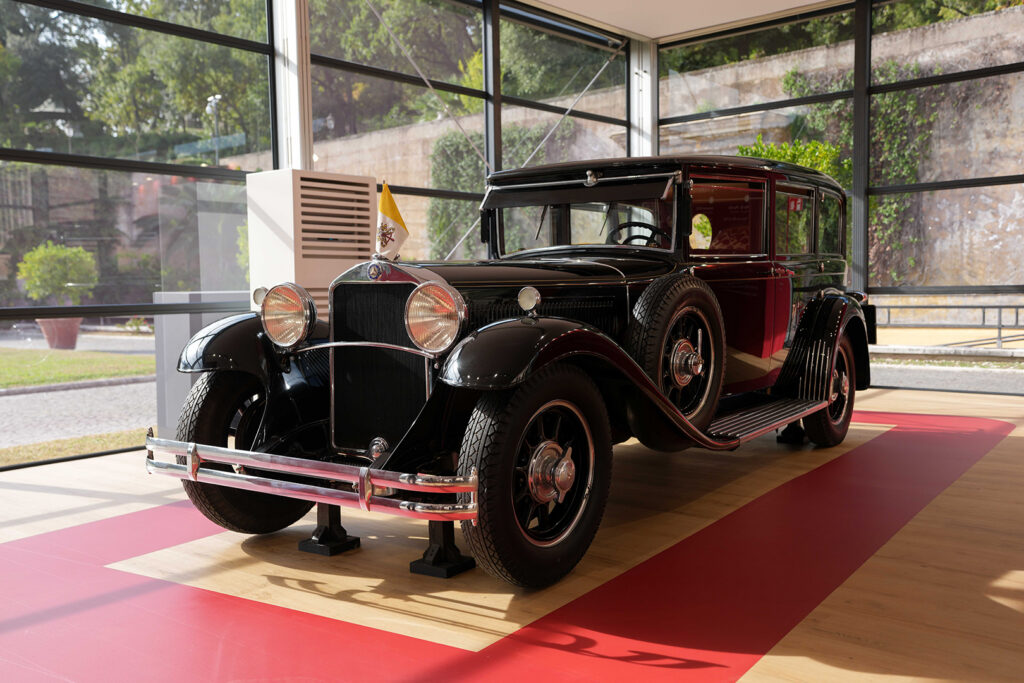
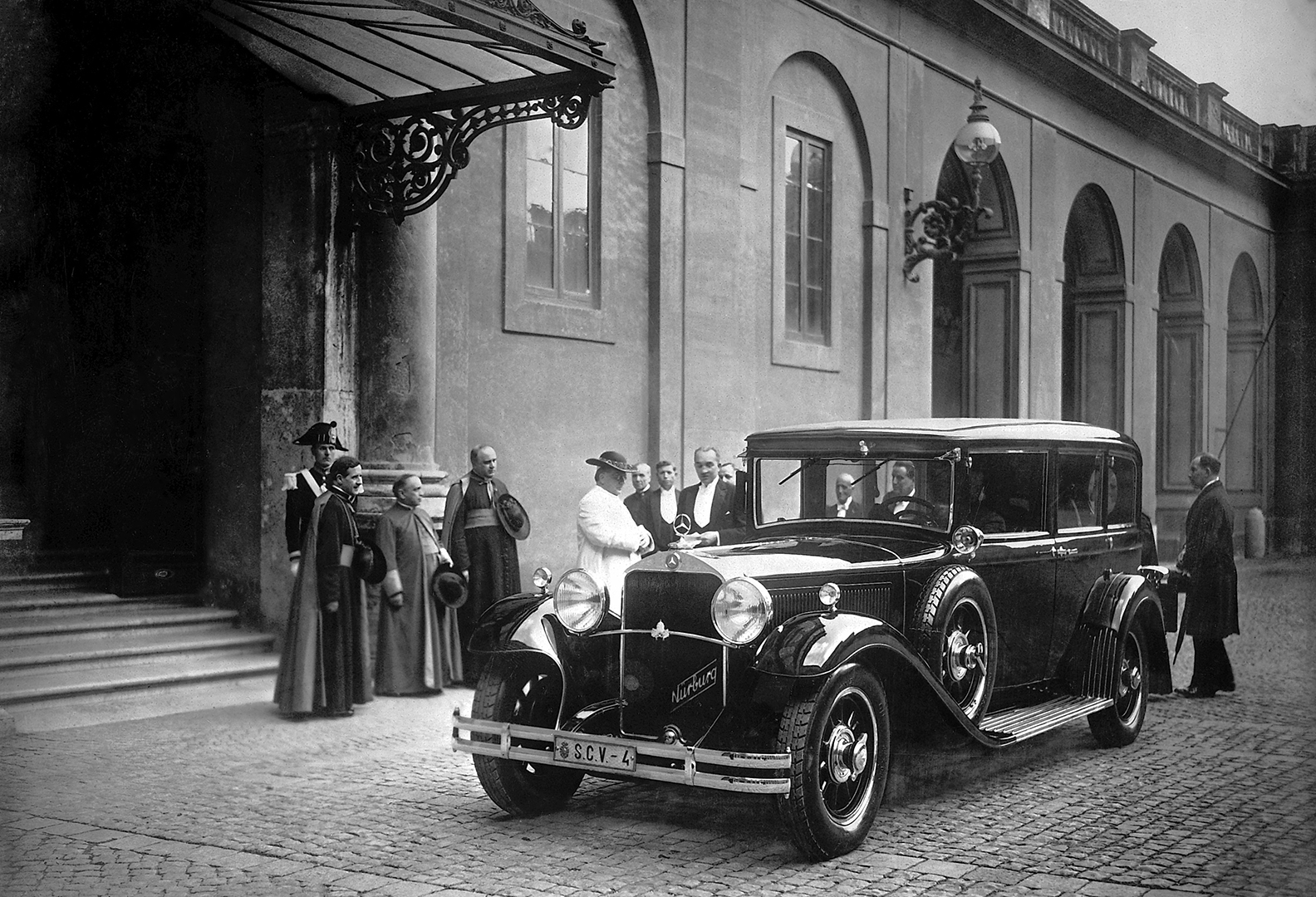
Instead, the Mercedes-Benz Nürburg 460 limousine given to Pope Pius XI in 1930 has a large silk-brocade upholstered chair for the pope that faces other seats for his assistants in the back, and it has buttons for the pope to push that light up a dial in the driver’s section indicating “go faster,” “go slower,” turn right,” “turn left” and “go home.”
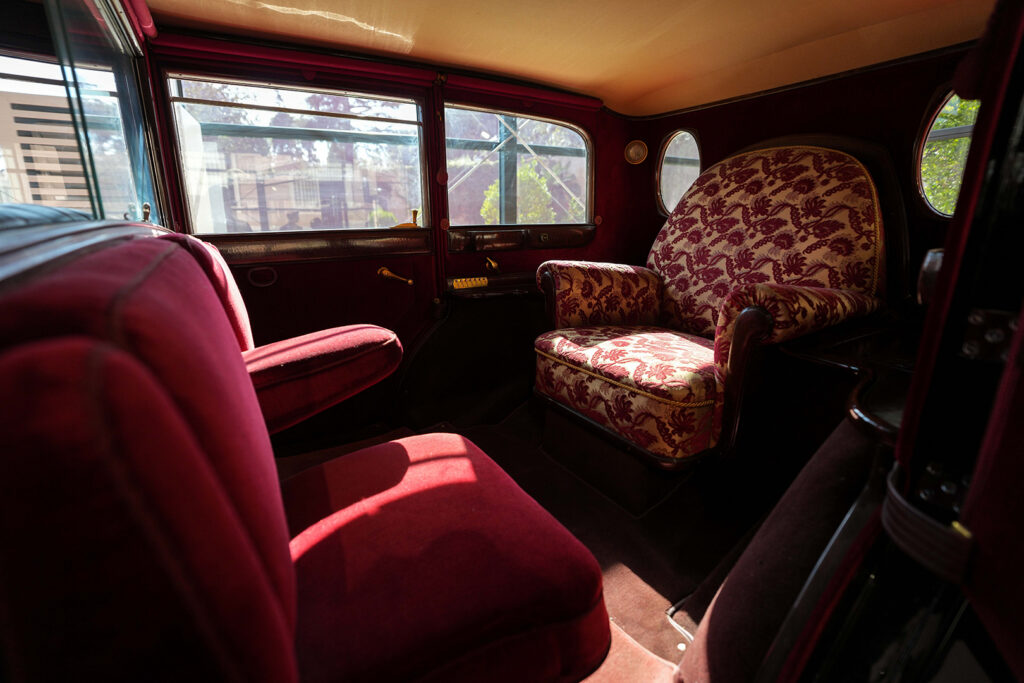
“Those were the electronics in 1930,” said Marcus Breitschwerdt, the CEO of Mercedes-Benz Heritage, during a news conference at the museums Oct. 28, unveiling the new, temporary exhibit of vehicles specifically designed and donated by the German company to the popes.
This fine-tuned attention to the unique needs and ministry of a papal passenger helped solidify an almost 100-year relationship between the Vatican and Mercedes-Benz, which was also celebrating the 140th anniversary of Karl Benz submitting a patent for his gas-powered vehicle in 1886, launching the invention of the automobile.
Another “invention” would eventually be made in the 20th century: the iconic popemobile, that is, a vehicle that could not only get a pope from place to place like with his special limos and sedans, but also let him be more visible and close to the people.
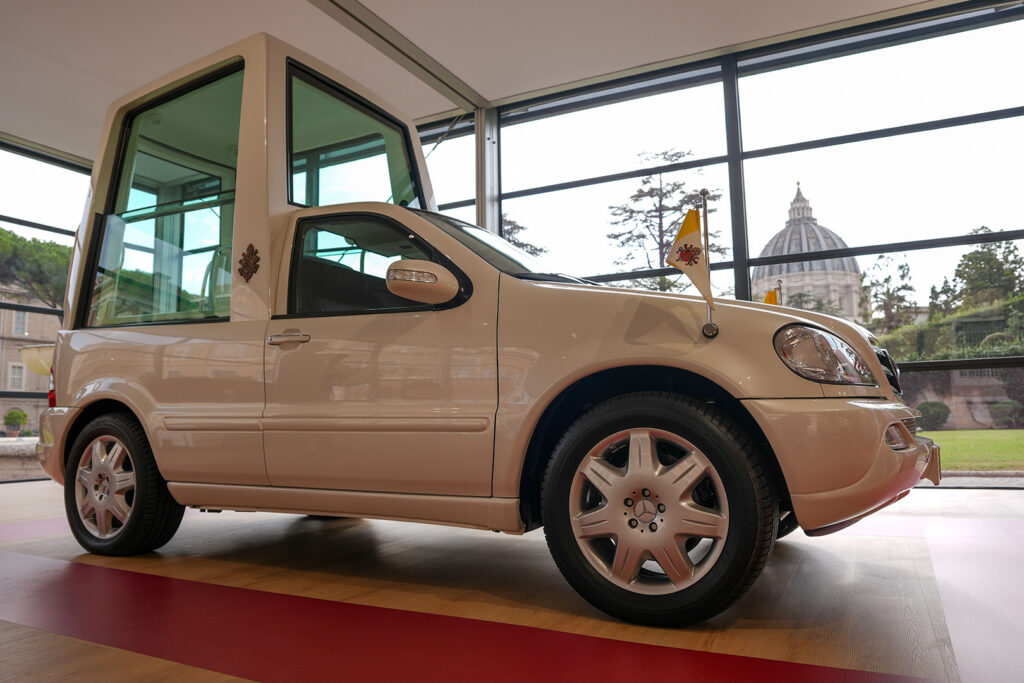
Back in the old days, the pope was hoisted up high in a grand “sedia gestatoria,” or portable papal throne, carried on the shoulders of 12 “sediari” or chair-carriers to move the pope through the crowds of the faithful during special ceremonies.
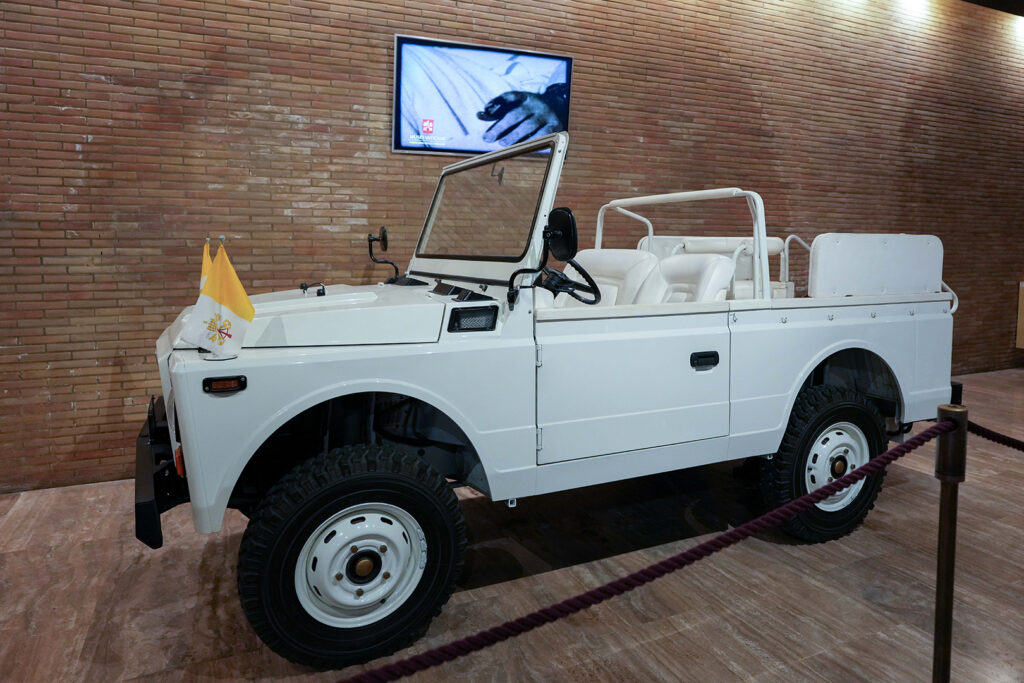
The first to create a vehicular version of that was Toyota, which modified an all-white 1975 Land Cruiser by removing the roof and rear body panel so the car was open and St. Paul VI could stand and offer his blessings.
However, there was nothing to sit on, Barbagallo said. So, for St. John Paul II, somebody retrofitted a white swivel seat taken from “a barber’s chair — I think it belonged to John XXIII — that they had to place on a metal base.”
Next came the all-white open-air 1980 Fiat Campagnola jeep, whose use became short-lived after a gunman in the crowd shot at and hit St. John Paul in 1981, after which all vehicles had to be made bulletproof.
The popemobile continued to evolve in other ways to adapt to the times and the pope’s agenda of greater sustainability, with the first fully electric, emissions-free popemobile created by Mercedes-Benz for Pope Francis before the 2025 Holy Year and used by Pope Leo XIV during his 2026 trip in France.
When greeting delegates from Mercedes-Benz at the Vatican Oct. 28, Pope Leo said, “Over the decades, the popemobile has evolved from a means of transportation into an instrument of encounter, enabling the pontiff to draw closer to the faithful during pastoral visits and public celebrations.”
“In this way, your work has helped facilitate the Church’s mission of reaching out to people and bringing a message of faith, hope and charity to the world,” he said, encouraging them “to continue placing technological innovation at the service of human dignity, care for creation and the common good.”