


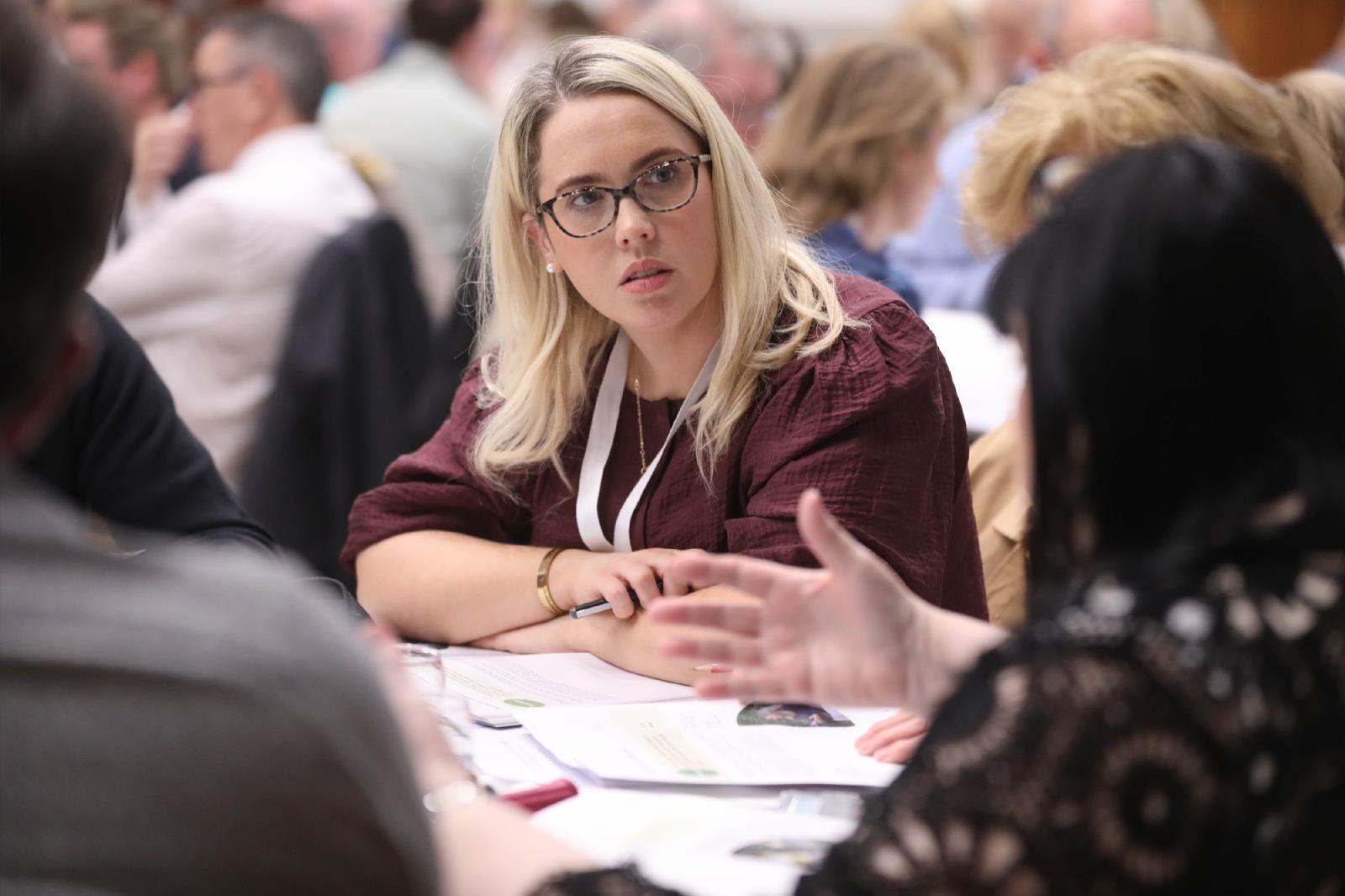
DUBLIN (OSV News) — A synodal assembly in Ireland at which laypeople, religious, clergy and bishops from across the island gathered to vote on proposals resulting from the synod process marked the “end of an era and the beginning of something new,” said Bishop Niall Coll of Raphoe.
The delegates voted on 35 proposals at the Oct. 17 gathering in Gormanston, County Meath, based on themes emerging from Ireland’s five-year synodal way. Bishop Coll told OSV News the assembly highlighted a “clear recognition” of the need to prepare people for discipleship in a local Church that has been “chastened and challenged” by secularism and the abuse crisis.
A majority of the proposals that received the most favorable responses centered on fostering “an evangelizing Church”, the 63-year-old bishop added.
Cultural Catholicism “is over,” said Bishop Coll, as people know that the Church needs to form “intentional disciples.”
Heavy support for review of catechetical, sacramental formation
The most “highly recommended” proposals called for a review of catechetical and sacramental formation (69% highly recommended), healing to be a priority of the synod (67%), parishes to become faith formation spaces (65%) and for engagement with Irish society in discerning the common good (63%).
The most controversial issues were the establishment of a national office for women, subtitled “mainstreaming women’s inclusion” — an office 56% did not recommend — and the ongoing exploration of women’s ministry, including the diaconate. Some 27% did not recommend pursuing the latter option, the second highest negative response, although 42% highly recommended it.
The nonbinding recommendations of the assembly will be sent to the bishops’ conference for its consideration.
A member of the Irish National Synodal Team, Jessie Rogers, told OSV News that the voting itself, while valuable, is a “blunt instrument,” adding that the synodal team will reflect on the written responses over the coming days.
One delegate, Michael Kelly, who is director of public affairs for Aid to the Church in Need Ireland, said the votes highlighted that there is still a problem regarding how synodality is received by the faithful.
‘Church teaching on core issues is not up for debate’
Despite repeated clarifications from the Vatican, “a very small, stubborn and vocal minority don’t seem to understand that Church teaching on core issues is not up for debate,” Kelly told OSV News. However, he added that the driving focus was the desire of participants to see “grandchildren and great-grandchildren thrive in the faith.”
Another delegate, theologian Thomas Finegan of Mary Immaculate College, agreed that mission was given the most support. Finegan told OSV News that there was no “strong mandate” regarding women deacons, adding that contributions from delegates on the day indicated “notable pushback.”
Cardinal Mario Grech, the secretary general of the Synod of Bishops, addressed the delegates by video at the beginning of the conference. Cardinal Grech told assembly participants not to “measure the future of the Church simply by what is disappearing.”
He urged them to “discern what the Holy Spirit is bringing to birth” and stressed the need to not “simply manage a diminishing ecclesial landscape. Reposition the Church for mission within it.”
Ruadhán Jones writes for OSV News from Dublin.
