


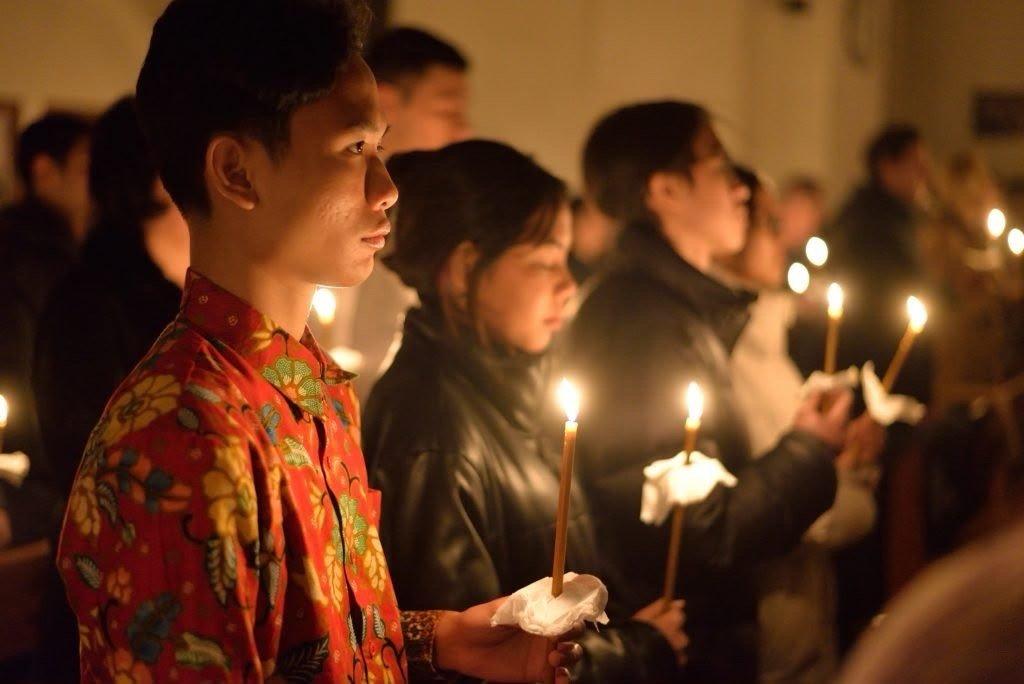
WARSAW, Poland (OSV News) — Every day for more than four years, in a Catholic parish deep in the Russian region of Siberia, a small community has gathered before the Blessed Sacrament to pray the rosary for peace between Russia and Ukraine.
The prayer has continued since Feb. 24, 2022, the day Russia launched its full-scale invasion of Ukraine. It includes another intention, one that Jesuit Father Wojciech Ziólek said has become essential to his ministry: that God would “save our hearts from hatred and revenge.”
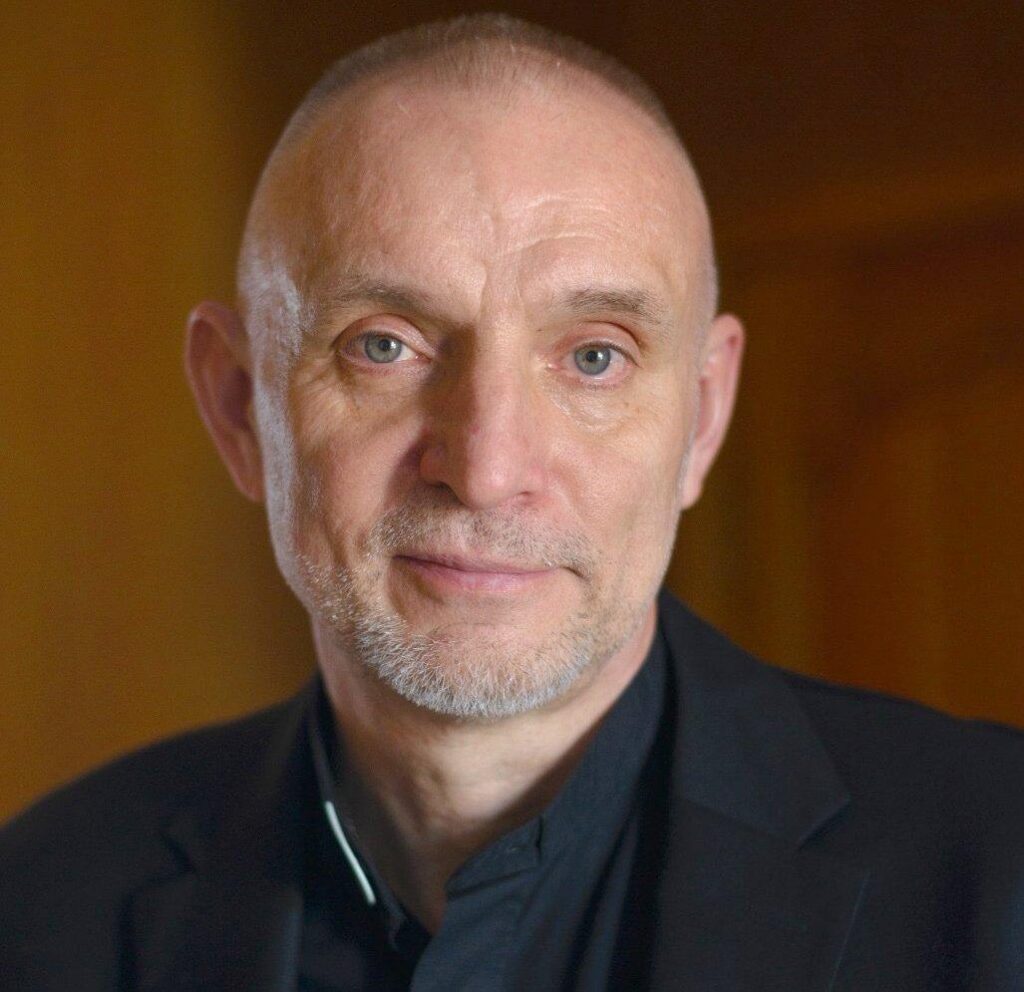
When the war broke out, the world of Father Ziólek, the Polish pastor of Our Lady of the Rosary Parish in Tomsk, seemed to collapse. “I cried so much at the beginning. It was terrible,” Father Ziólek told OSV News during a brief visit to Poland in October. “There was this enormous sense of helplessness. As a Jesuit community, we did not know what to do.”
Father Ziólek spoke with OSV News in Warsaw Sept. 17, ahead of the 100th World Mission Sunday observed Oct. 18, and on the same day Russia launched another large-scale missile and drone attack on Ukraine. The overnight barrage wounded more than 20 people in Kyiv and other cities and damaged homes and infrastructure across several regions, according to Ukrainian officials.
The war is now well into its fifth year, as diplomatic efforts continue but so far have not brought a resolution for peace. On Oct. 11, right before announcing that would undergo surgery to remove a lung nodule, Pope Leo XIV renewed his appeal for peace, saying, “The war in tormented Ukraine continues to cause suffering far beyond its borders, especially in the poorest countries, where so many people depend on grain imports.”
“I make a heartfelt appeal to the parties to the conflict to allow for the safe transport of grain through the Black Sea. The daily bread of millions of people cannot be held hostage by the war,” the pope said.
Just weeks earlier, Archbishop Paul R. Gallagher, the Vatican secretary for relations with states and international organizations, had completed a visit to Moscow, where he met Russian government officials, representatives of the Russian Orthodox Church and Russia’s small Catholic community. During Mass with Catholic clergy and religious, he urged the Church in Russia to become “true artisans of peace in our daily lives.”
A microscopic minority
For Father Ziólek, that daily life takes place far from Moscow. His parish covers Tomsk Oblast, a Siberian region of more than 122,000 square miles — slightly larger than his homeland, Poland.
“The first thing that makes an impression on someone who has never been there is the distances,” Father Ziólek told OSV News. Across that enormous territory, he added, there are just two Catholic churches: the parish church in Tomsk and a tiny wooden church in the village of Bialystok.
“We are not simply a minority. We are a microscopic minority,” Father Ziólek said. “For someone coming from a Catholic country, or even from a place where there are several churches in one city, it is difficult to understand that across an area the size of Poland there are two churches.”
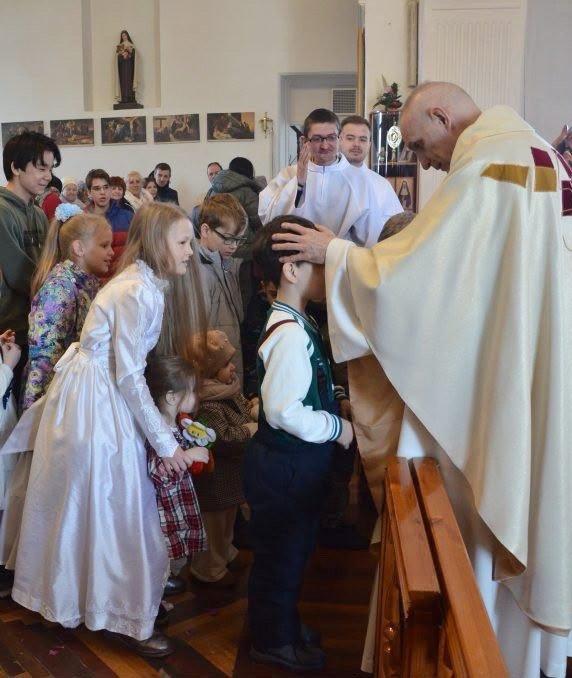
By Siberian standards, however, Tomsk has a large Catholic parish. Three Sunday Masses draw a combined 200 to 250 people, Father Ziólek said. In some Siberian Catholic communities, he added, Sunday Mass may bring together only 20 or 30. Catholics make up only about 0.5% of Russia’s population, with the Latin-rite Catholic community numbering roughly 800,000 people nationwide, according to recent Church data.
The congregation itself is a portrait of Siberia’s complicated religious history. There are descendants of Poles, Germans and Lithuanians, but also ethnic Russians, including people baptized in the Orthodox Church as infants, who never practiced the faith and later began searching for God as adults.
‘How did you come to God’
That search, Father Ziólek said, is something Russians speak about in a way that still moves him. “There is a beautiful question people ask here, a question I had never heard in Poland: ‘How did you come to God?'” Father Ziólek said. “And then the story begins.”
For older Catholics, those stories often reach back into families in which faith survived decades of Soviet atheism through a grandmother or great-grandmother who prayed while younger generations were taught that religion was meaningless.
Now something new is happening.
“The first generation of Catholics who have been going to church since childhood is entering adulthood,” Father Ziólek said. “These are people who have had contact with faith from birth, who were baptized as children.” Not everyone stays. Some young people rebel and leave, just as they do elsewhere, Father Ziólek said. Some later return. Others arrive by unexpected routes.
Father Ziólek recalled two young women in their 20s who were walking home after a Saturday night party. It was early Sunday morning, it was cold, and public transportation had not yet started running. They saw the Catholic church open and went inside to get warm. “They were dressed as you might dress for a nightclub,” Father Ziólek said. “They were afraid that some grandmother would spot them and tell them what an offense against God it was to come into church dressed like that.”
Nobody did. Mass began while they sat inside. The young women had never attended Catholic Mass before. “And then came the sign of peace,” Father Ziólek said. “Those grandmothers not only did not scold them, but reached out their hands to them. They were shocked.”
Today, he said, both women are among the parish’s most active members. Stories like that help explain why the community matters in a place where Catholics are few and separated by immense distances. Father Ziólek said laypeople play an unusually large role in parish life, including administration, fundraising and other ministries.
“They stay, because here they experienced God,” Father Ziólek said. “And they stay because this is a place of encounter.”
The fruits of war
The war brought a different kind of test. From its first day, Father Ziólek and his fellow Jesuits decided to hold a daily half-hour of Eucharistic adoration and pray the rosary for peace between Russia and Ukraine.
“What we have tried to do from the beginning is, first, to pray for peace and, second, to protect people from hatred and fear,” Father Ziólek said.
“Because the two main fruits of war, the ones that appear immediately, are hatred and fear.”
He is careful to distinguish that experience from religious persecution. “No one persecutes us here as Catholics,” Father Ziólek told OSV News, adding that the parish has warm relations with many Orthodox Christians. Tomsk, he said, has its own tradition of religious and cultural coexistence, shaped partly by generations of people sent there from different corners of the Russian Empire and later the Soviet Union.
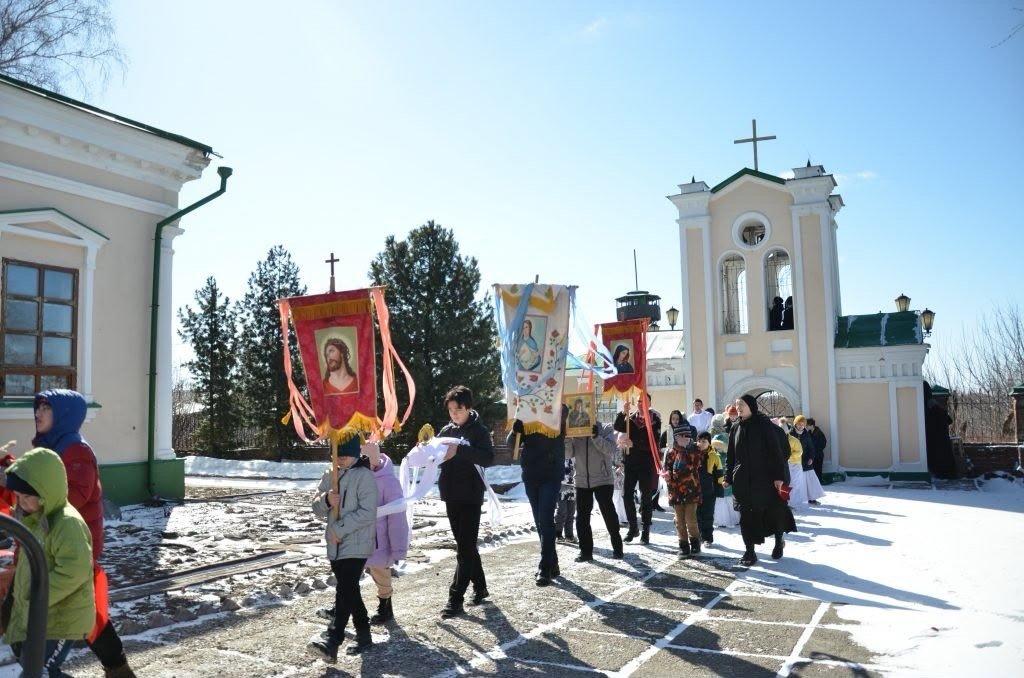
The Catholic Church itself carries that history. After the suppression of Poland’s November Uprising against Russian rule, many Polish insurgents were exiled to Tomsk and the surrounding region. Their growing presence helped create the need for a permanent Catholic church building, which was consecrated in 1833.
Nearly two centuries later, a Polish Jesuit is serving Catholics there.
Father Ziólek said he welcomed Archbishop Gallagher’s recent effort to meet Russia’s local Catholic community as part of the Vatican’s contacts in Moscow. But diplomacy, in his experience, is only one part of building peace. “I have much more hope in human gestures that bring Catholics, Orthodox Christians and Protestants closer to one another,” Father Ziólek said, pointing to Tomsk as a place where such relationships are part of ordinary Christian life.
For him and the other Jesuits, remaining present to that community has become particularly important since the war began. “Our duty – our honorable duty – is to be with people,” Father Ziólek said, “to help them and accompany them, as much as we are able, on their way to God.”
“People often ask me what I miss in Russia,” Father Ziólek told OSV News. “I always answer: freedom and parsley.” The parsley, he quickly explained, is quite literal. “They have parsley leaves in the vegetable shops, but no parsley root. And you need it to make Polish soup.”
But when OSV News asked what Russian Catholics themselves are missing, Father Ziólek’s answer was no longer a joke. “Love,” he said. “The experience of someone accepting them as they are. Someone who understands their tangled and very painful situation.”
“I think the essence of Christianity is to see the human being in another human being,” he said. “And the essence of working in Russia, in Siberia, is to see the human being in Russian.”
“More than that, it is about seeing the face of God in another person,” Father Ziólek added. “And the essence of working in Russia during the war is to see the face of God in Russians and help them see that face in Ukrainians.”
– – –
Katarzyna Szalajko writes for OSV News from Warsaw, Poland.
